

Driveway Installation Contractor in Mission Hills, CA
Thank you for contacting us.
We’ll get back to you as soon as possible.
We got it.
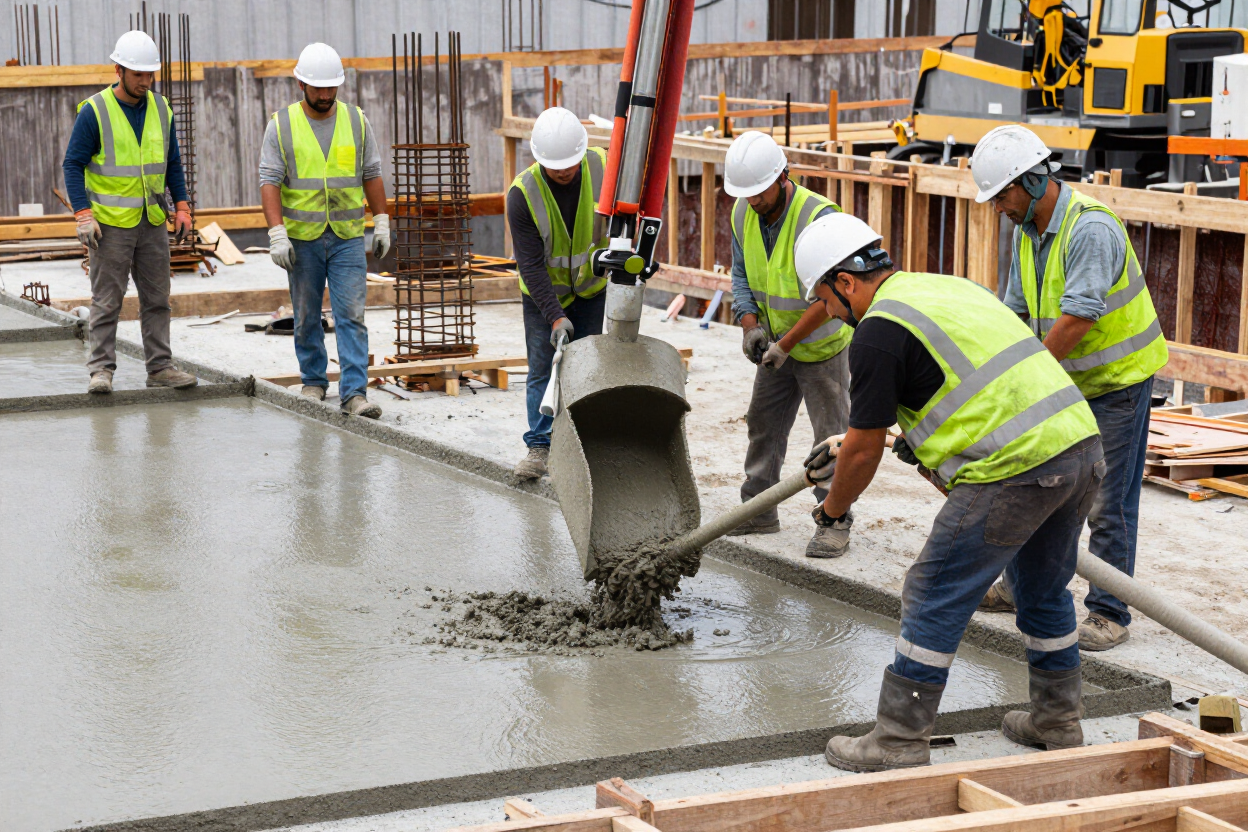
We walk the lot before anybody talks price. Mission Hills sits around 913 feet up on the north end of the Valley ,so most lots tilt toward the street more than owners realize, and that tilt decides how we set the forms. Standard job goes like this: saw cut and haul off the old slab, compact 4 inches of Class 2 base, tie #3 rebar on 18-inch centers, then pour 4,000 psi mix about 4 to 5 inches thick. We broom finish it and cut control joints every 10 feet so cracks show up where we want them. Most 2-car drives take 3 to 4 days.
Every Pour Starts With a Hard Look at the Base and Slope
Last August we rebuilt a 22 by 30 foot driveway at a 1960s ranch house near Rinaldi and Sepulveda. The old slab was only 3 inches thick, heaved about 2 inches by a neighbor’s pepper tree root, and water was pooling against the garage door. We cut it out, hauled off 660 square feet of broken concrete, regraded to a 2 percent fall toward the street, and poured a 5 inch reinforced slab with a light broom finish. Total came to $9,240 and took four days. The owner said he was most surprised that we showed up at 6:30 like we said.
A Recent Driveway Rebuild Near Rinaldi and Sepulveda
I started this company because I got tired of watching crews skip the base to save a morning. Our guys are the ones who show up, no subs, and we pull the city permits ourselves so you dont chase paperwork. We’re based in North Hills, a few miles down Sepulveda, so a Reliable Driveway Installation Contractor in Mission Hills, CA is basically our own backyard. We hold a CSLB C-8 concrete license and carry insurance. Honestly the thing people thank us for most is boring stuff, like grading the apron right and washing the truck chute out away from the neighbors place.
Why Mission Hills Homeowners Keep Calling Us Back
Here is what we actually charge, not a teaser number. Plain broom finish concrete runs $9 to $12 per square foot installed, and stamped or colored work lands between $14 and $18. Tear out and haul off adds $2 to $4 per square foot. So a typical 20 by 24 foot two car driveway comes to roughly $4,300 to $5,800 before demo. Permit fees, extra rebar for heavy trucks, or a wider apron change the number, and you recieve all of it in writing before you sign. That puts us right in the middle of what LA averages.
What a New Concrete Driveway Costs Around Here
Driveway Permits, Curb Cut Rules and Setback Requirements in Mission Hills, Los Angeles
Bureau of Engineering A-Permit for Driveway Aprons
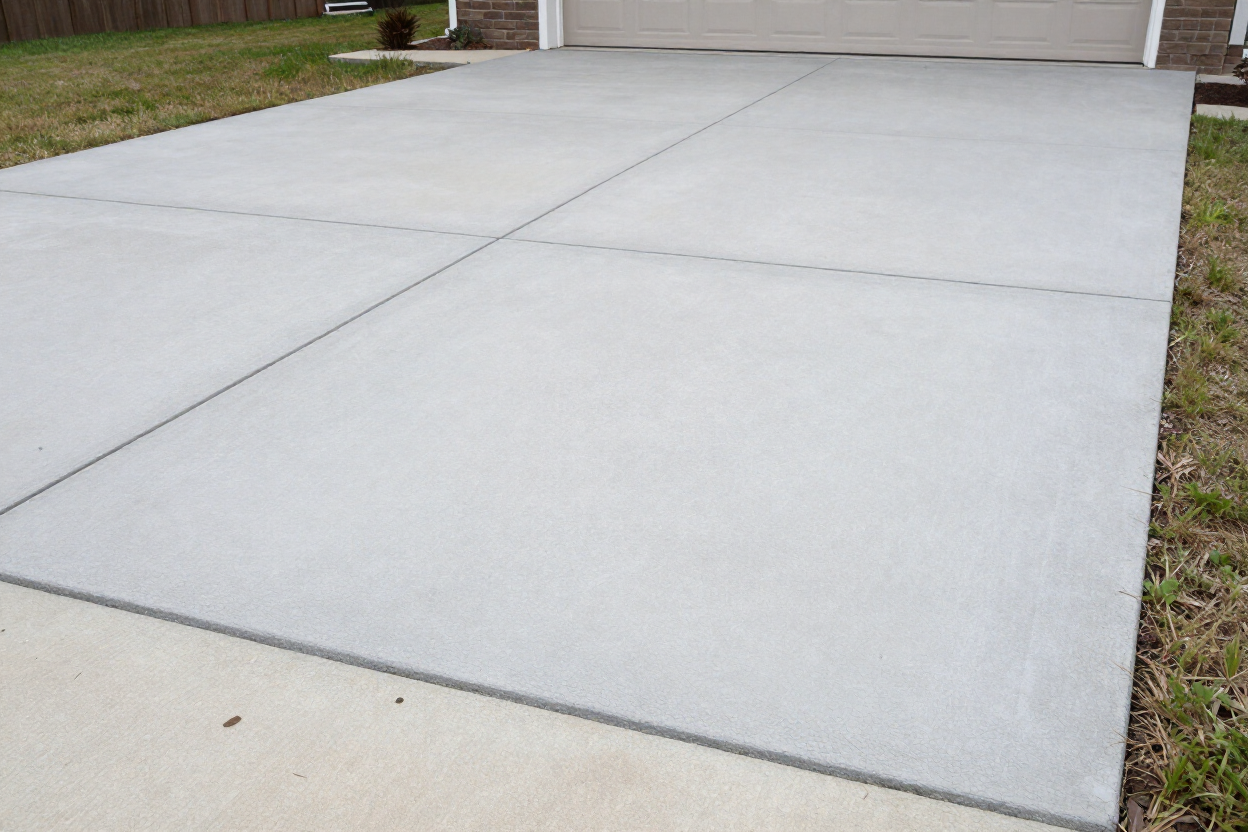
Anything that touches the public right-of-way, meaning the apron, curb cut or sidewalk crossing, needs a Class A permit from the City of Los Angeles Bureau of Engineering. We file for it ourselves through the Valley District Office and build the apron to Standard Plan S-440-4. The permit comes first and the pour comes second, always. Skipping that step is how homeowners end up tearing out brand new concrete.
Driveway Width and Curb Space Limits Under LAMC 62.105
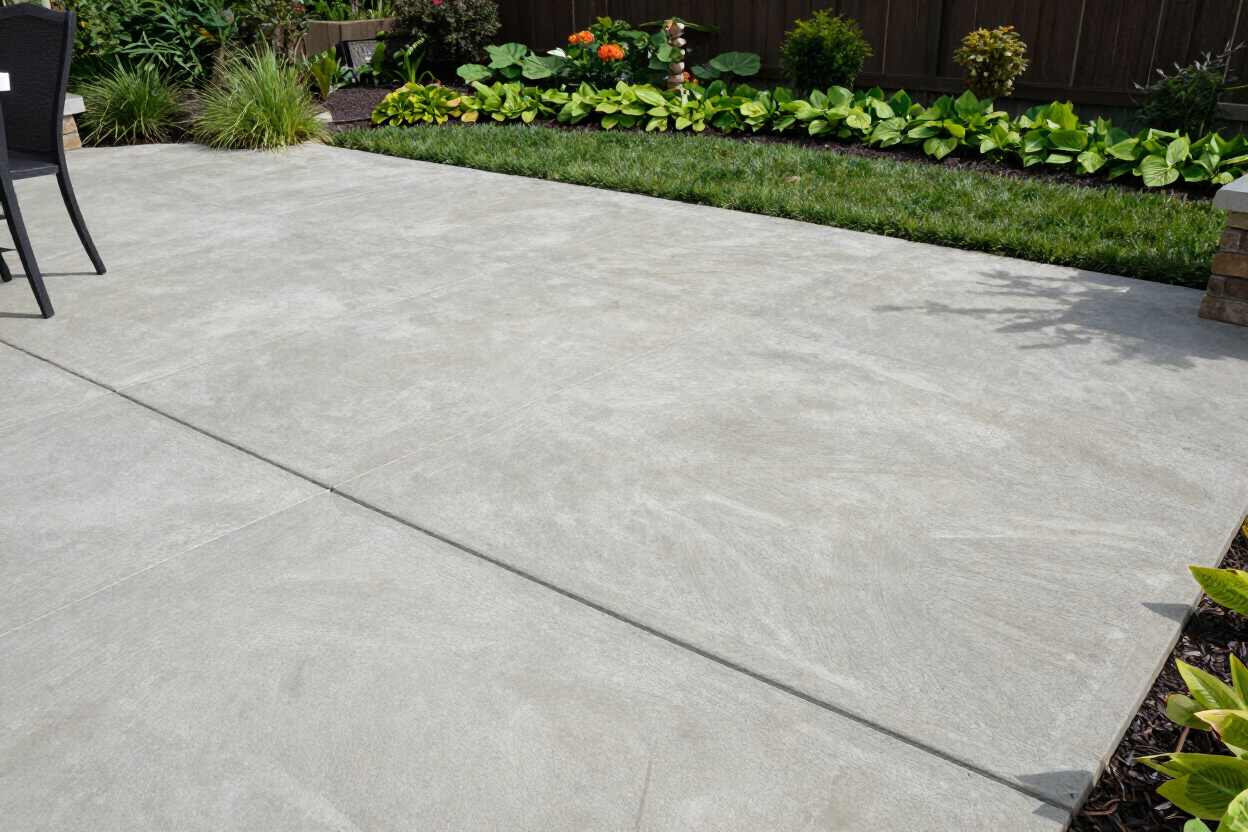
Los Angeles Municipal Code Section 62.105 controls where a driveway approach can sit, how wide the apron can be, and how much curb space it can use. We measure your frontage first and sketch the layout before we quote it, because a wider approach than the code allows needs a written exception request to Engineering. If a lot is tight, we’ll tell you straight what’s possible instead of promising a 3-car drive that wont get approved.
Street Trees, Utility Poles and DigAlert Before Excavation
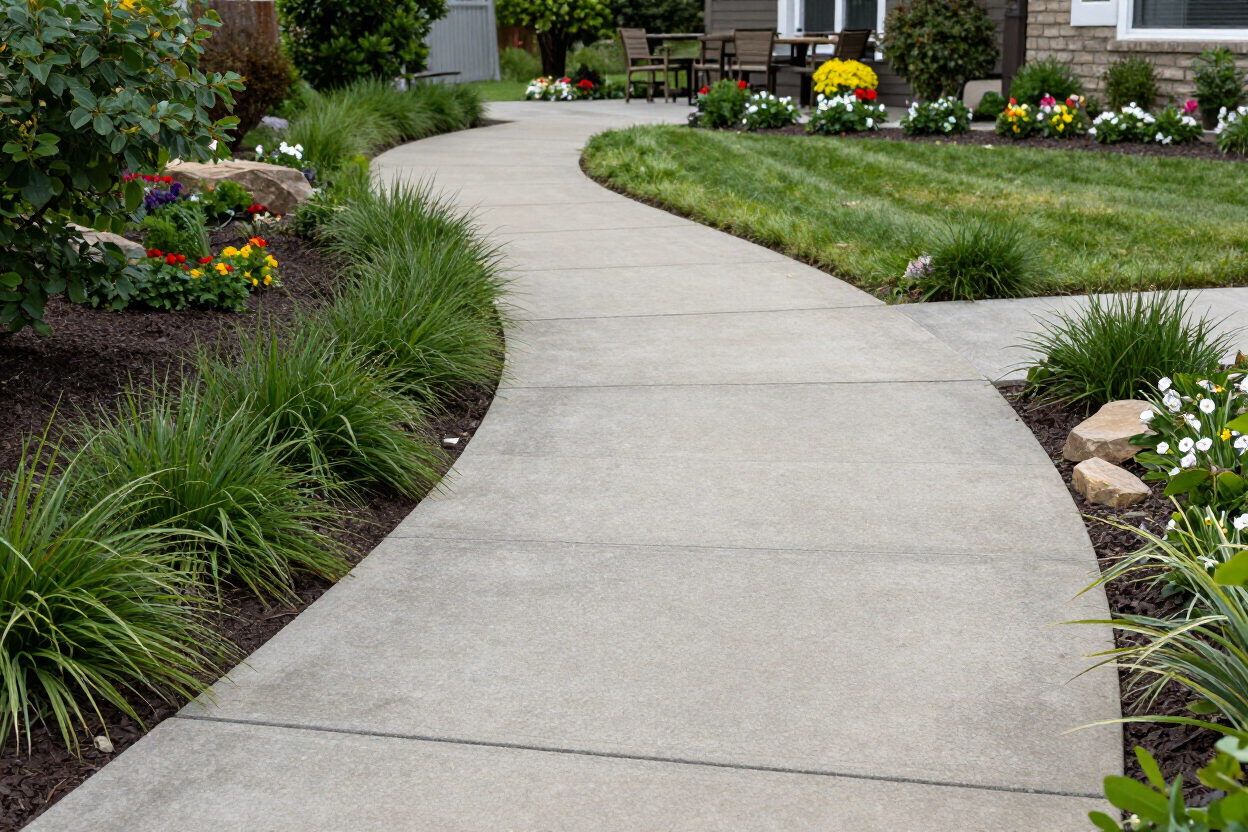
Obstructions near the apron are a big deal. Meters, utility poles, guy wires, storm drain structures and street trees all limit where a curb cut can go, and removing a street tree or cutting its roots needs approval from Urban Forestry under the Bureau of Street Services. We also call 811 for DigAlert marking at least two working days before we dig, since a hit line costs everybody a bad week.
Parking Plans, Setbacks and Zoning Checks
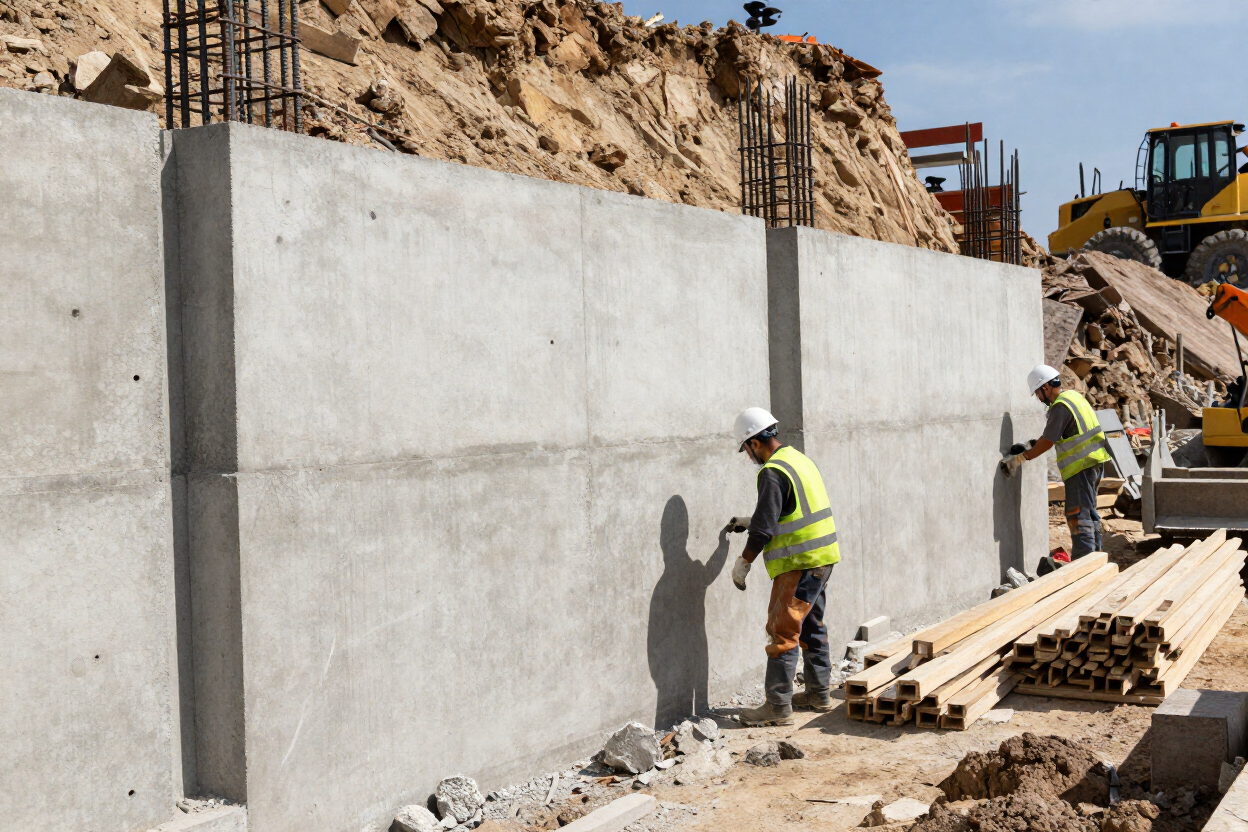
Most Mission Hills lots are single-family zoned, and the zoning on yours decides how much front yard can be paved for parking. A new or reworked parking area and driveway plan can go to the Valley District Office of Engineering and LADOT for review, so we look at that before laying out forms. Hiring a Reliable Driveway Installation Contractor in Mission Hills, CA matters here, because a bad layout cant be fixed after the concrete cures.
Inspections, Concrete Testing and Stormwater Runoff
City inspectors look at the apron forms and base before we pour, and Engineering can ask for concrete cylinder testing on some work, so we schedule the pour around inspector availability. We also grade every driveway so runoff heads to the street gutter and not onto the neighbors yard, and we check LA Sanitation’s stormwater rules for any big increase in paved area. Final sign off happens when the permit is closed out.
Answers to Common Driveway Installation Questions in Mission Hills, CA
Is it too hot in Mission Hills to pour a driveway in summer?
Not if you plan it right. Valley summers regularly push past 95 degrees and Santa Ana winds dry the surface fast, which causes plastic shrinkage cracks. So we start pouring at sunrise, wet the subgrade, use a retarder when needed, and cover or mist the slab for curing. Honestly July afternoons are when I say no. Spring and fall are the sweet spot for most driveway installs around here.
Does the soil in Mission Hills need special prep before concrete?
Soil here is mostly alluvial material washed down from the nearby foothills, so you get silty, sandy stretches mixed with clay pockets that swell when wet and shrink when dry. We proof roll the subgrade, dig out soft spots, and compact a Class 2 aggregate base in lifts. That base is what keeps the slab from settling or heaving, so we never skimp on it even when the dirt looks hard as a rock.
Can you build a driveway on a sloped lot in Mission Hills?
Yes, and plenty of lots near the foothill edges have real slope. We shoot grades with a laser level, check where the apron meets the street so bumpers don’t scrape, and add a trench drain at the garage when water has nowhere else to go. City rules limit driveway approach geometry, so steep ones get a plan review before we start. Slope is fine, but it has to be designed on purpose.
What happens if rain is forecast on the pour day?
We move it. Most of the Valley’s rain falls between December and March, and an atmospheric river can dump an inch in a few hours, which pits a fresh surface and washes out the cement paste. We watch the forecast 72 hours out, keep plastic sheeting on the truck for surprise showers, and reschedule without charging you when the odds are high. Dry spells in late spring are alot easier to schedule.
Why do older driveways near trees crack and lift?
Roots are the usual culprit. A lot of 1950s and 60s homes in Mission Hills have thin 3 inch slabs with no rebar and big parkway trees right beside them, and roots just push up whatever is in the way. We cut and replace those panels with thicker reinforced concrete, and if a street tree is involved we coordinate with Urban Forestry first. A root barrier helps too, but dont expect miracles.