

Concrete Slab Installation Contractor in Panorama City, CA
Thank you for contacting us.
We’ll get back to you as soon as possible.
We got it.
Most slab failures we get called out to fix started with lazy prep, not bad concrete. Here in the Valley the native soil is alluvial sand and silt that drains okay but settles if its not compacted. So we strip the grade, bring in Class 2 base rock, compact it in lifts to 95 percent, then set forms and #3 rebar on 16-inch centers with chairs so the steel actually sits mid-slab. Garage and patio slabs get 4 inches, driveways and shed pads that see a truck go 5 or 6. Control joints get cut within 12 hours so cracks go where we want.
Slab Prep Work Decides How Long Your Concrete Lasts
People always ask for a number first so here it is. In Panorama City and the rest of the north Valley we generally land between $9 and $14 per square foot for a standard 4-inch broom-finished slab, demo and haul-off extra. A 400 square foot patio slab usually runs $4,000 to $5,600. Thicker 6-inch driveway slabs with heavier rebar go $12 to $17 a sqft. Pump trucks add around $350 to $500 per pour, and mix strength changes the price too. We write it all up before we start, no surprise change orders mid job.
What a Slab Costs in Panorama City Right Now
Last September we poured a 20 by 24 garage slab for a family on Tobias Avenue, a 1950s Kaiser-built house where the old slab had sunk almost two inches toward the street. We demoed the old concrete, hauled out 14 tons, and re-compacted the subgrade after finding a pocket of loose fill near the back fence. The new slab went in at 5 inches with #4 rebar on 18-inch centers, a 3,500 psi mix, and a 1 percent slope to the apron. Total was $7,850 and the homeowner said he didnt expect it done in 3 days.
A Recent Pour on Tobias Avenue Fixed a Sinking Driveway
Folks looking for a Reliable Concrete Slab Installation Contractor in Panorama City, CA usually care about two things, showing up and not cutting corners. We’re a licensed C-8 concrete contractor based right over in North Hills, so Van Nuys Boulevard and Roscoe jobs are just minutes away, and the owner is on site for every pour. Lots of homes here have tight side access, so we bring wheelbarrows and a mini loader instead of tearing up your lawn. We also cure every slab properly, wet cure or compound, which alot of crews skip.
Why Homeowners Here Keep Calling Kingdom Concrete
Concrete Slab Permits, Setbacks and LADBS Rules in the City of Los Angeles
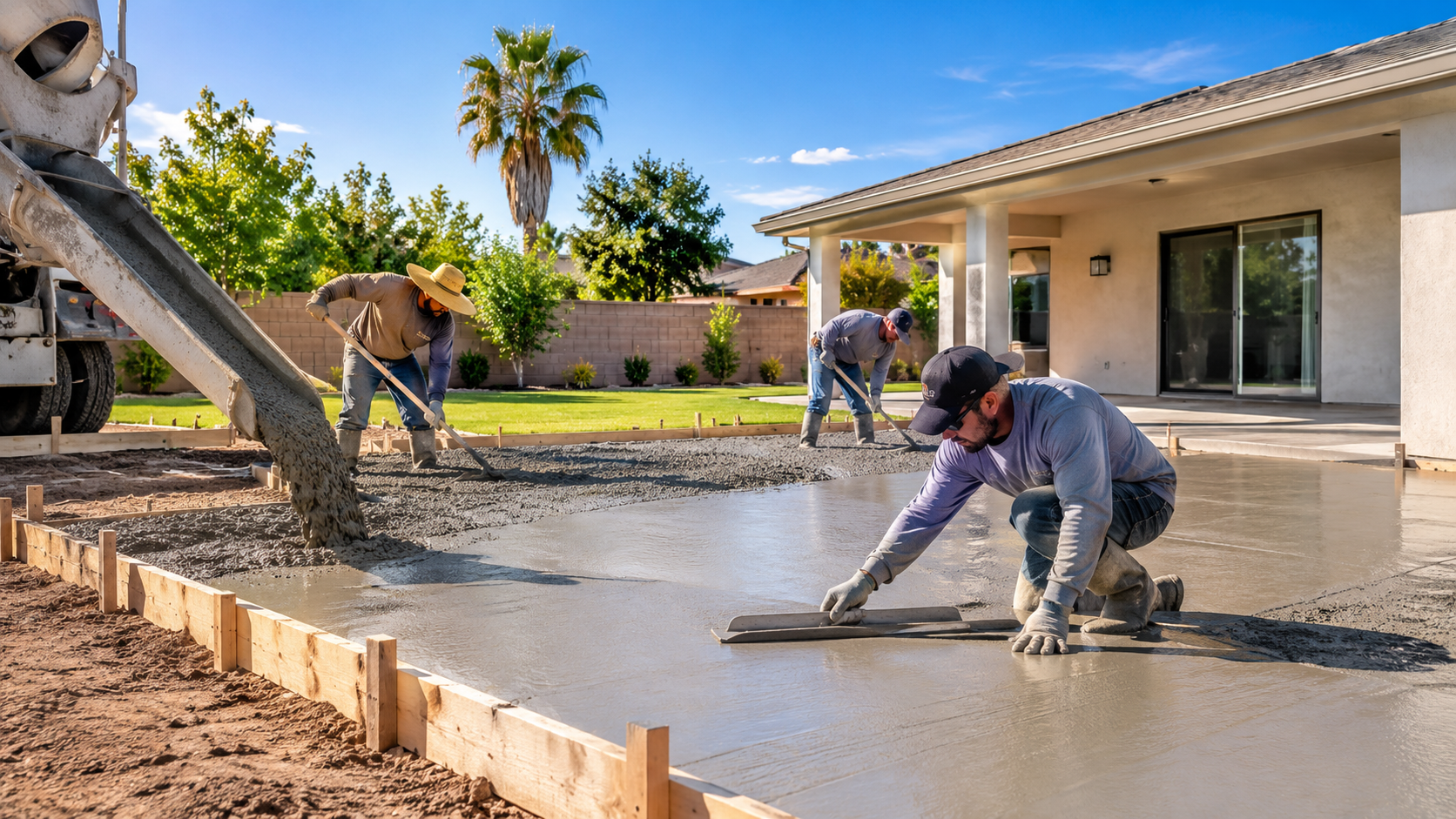
When a Concrete Slab Needs a Building Permit From LADBS
Panorama City sits inside the City of Los Angeles, so permits run through LADBS, and the Van Nuys office on Van Nuys Boulevard is the closest one. A plain ground-level, uncovered patio slab usually doesnt need a building permit, but slabs under garages, ADUs, room additions or attached patio covers do. Every Reliable Concrete Slab Installation Contractor in Panorama City, CA should confirm that before mixing anything, and we always do, since the city is Seismic Design Category D.
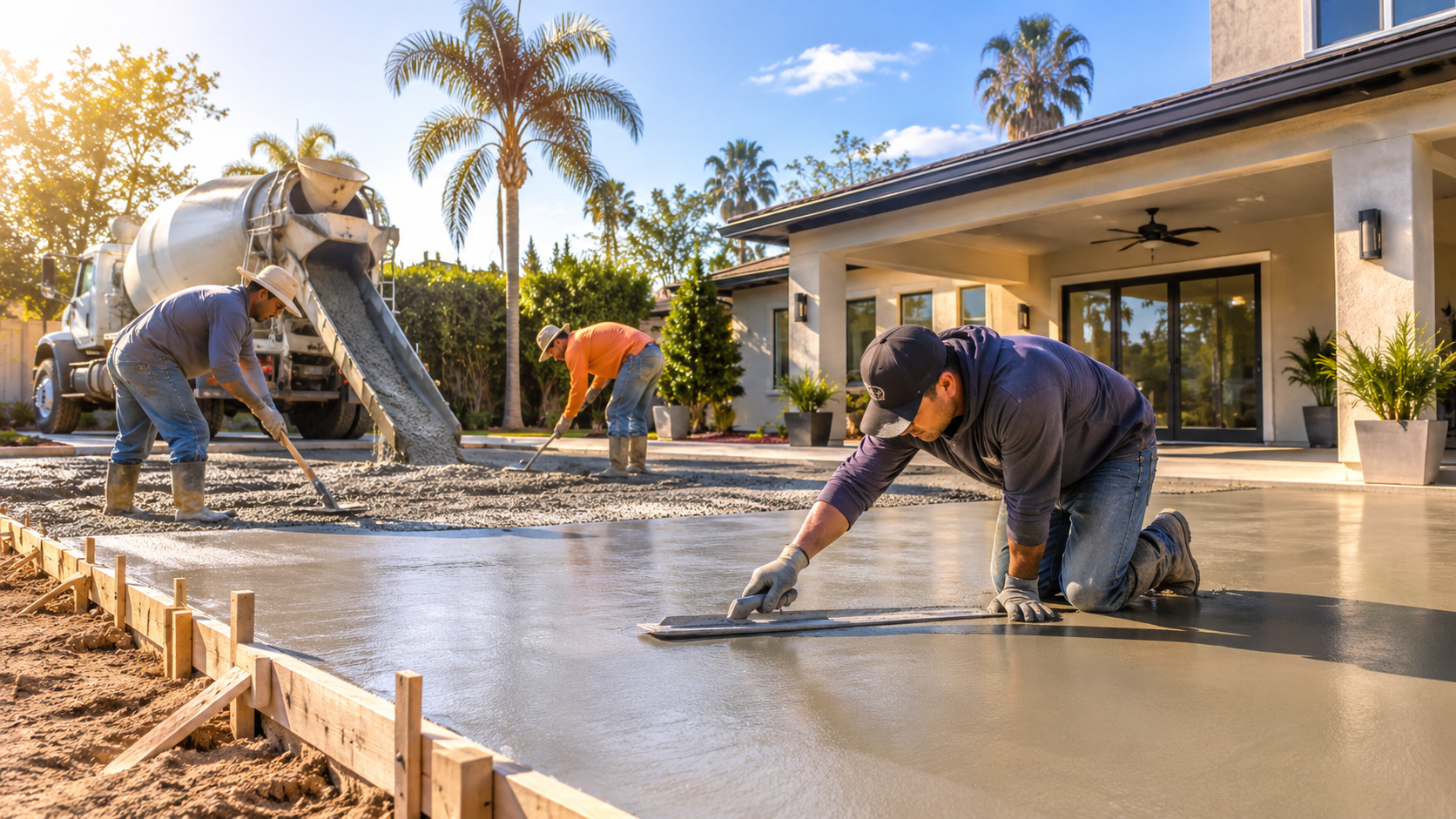
Zoning, Setbacks and Lot Coverage Limits for New Slabs
Before we quote a structural slab we look up the lot on the city’s ZIMAS zoning tool to see what zone and setbacks apply. A slab carrying a building has to respect the required yard setbacks, and Los Angeles also has lot coverage and paved-area rules that vary by zone. Some of the older tract homes in Panorama City have narrow side yards, so a few extra inches matter. We measure to the property line, not guess, and flag any HOA or deed restrictions too.
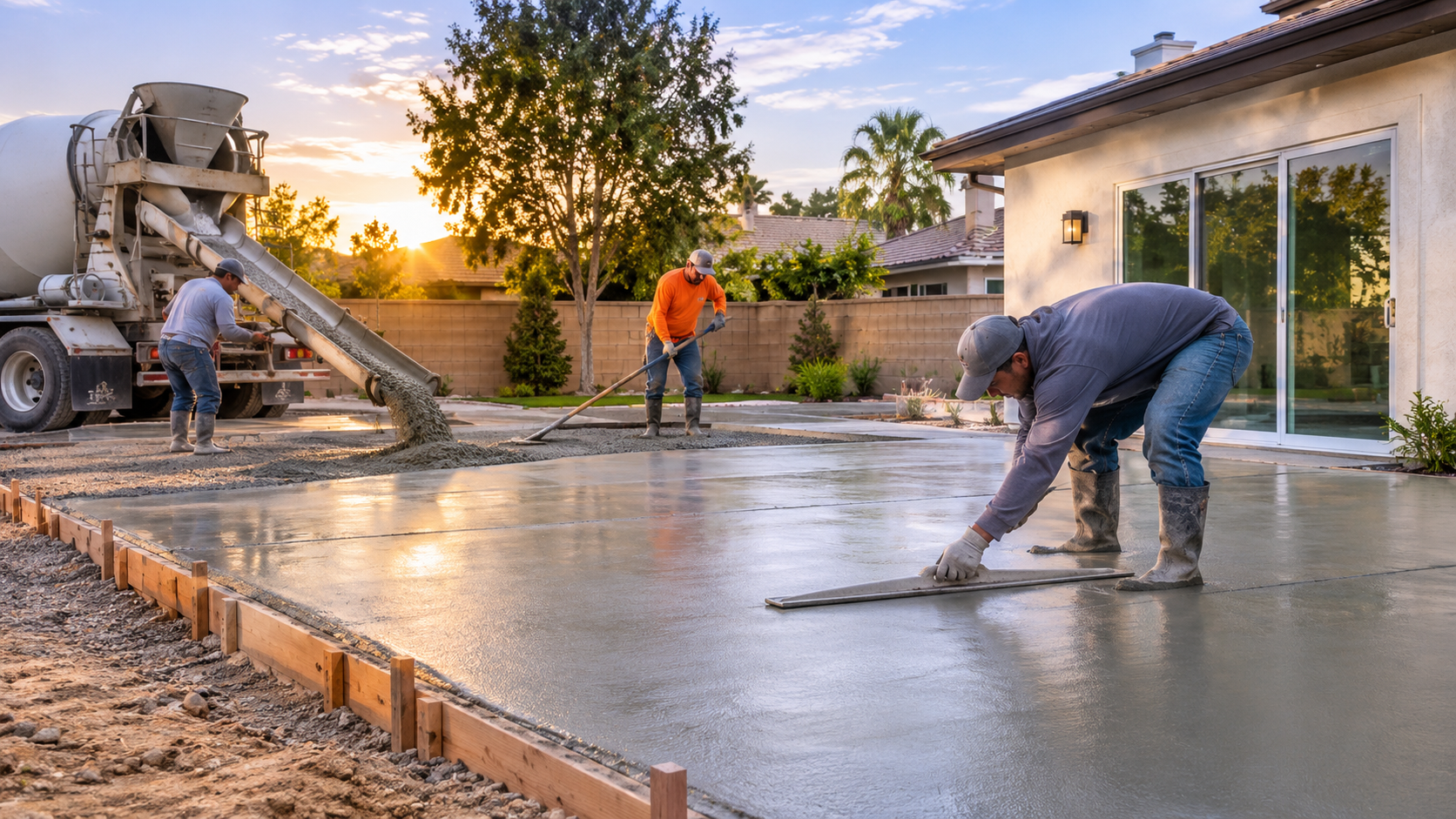
Call 811 Before We Dig Near Underground Utilities
Anytime we excavate for footings or a thickened edge, we have the lines marked first through 811 (DigAlert), which needs to be requested at least two working days ahead. That covers water, gas, electric, and sewer laterals that cross older Valley lots in odd places. We also keep forms and base rock clear of meters and cleanouts so the utilities can still get access. Its a small step but hitting a gas line ruins everybody’s week.
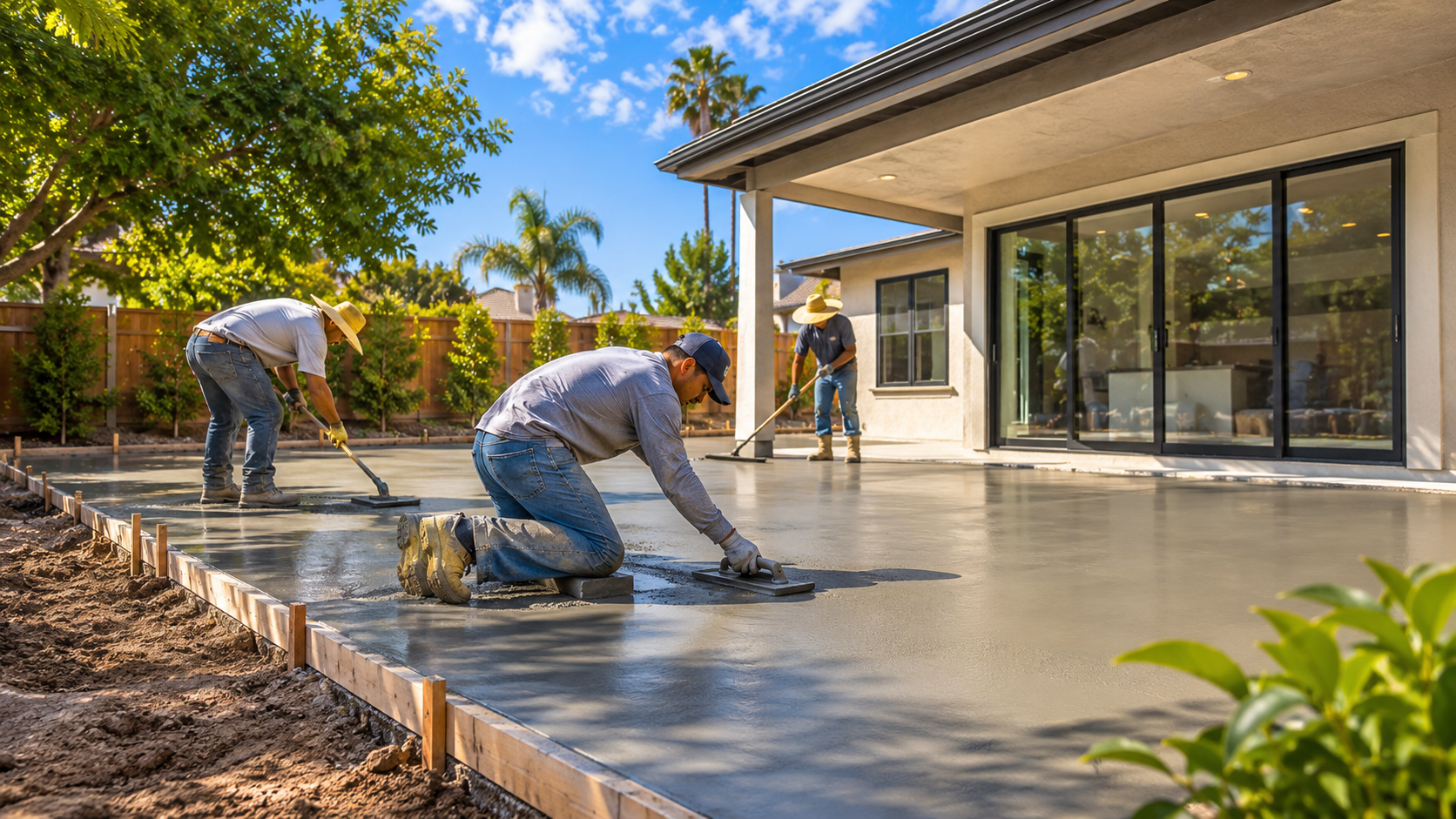
Driveway Aprons and Sidewalk Work in the Public Right of Way
If your slab job touches the driveway apron, curb, or sidewalk, that portion is in the public right of way and falls under the city’s Bureau of Engineering rather than just LADBS. A separate permit is generally needed for that work, and the city has its own thickness and slope standards for aprons. We tell customers up front when this applies. Panorama City also has lots of mature street trees, and roots near the sidewalk can change what the city allows.
Foundation Inspections and Approvals Before Concrete Is Placed
When a permit is required, LADBS wants an inspector to see the forms, rebar, and any anchor bolts or hold-downs before concrete goes in, and the pour shouldn’t happen until they sign off. Some jobs also need special inspection or a soils report. We schedule inspection windows ahead of time, keep the approved plans on site, and have the crew ready so the truck is’nt waiting. Final sign-off closes the permit, and we hand copies to the homeowner.
Concrete Slab Questions Panorama City Homeowners Ask Us
Will the Valley Summer Heat Crack My New Slab?
It can if the pour is handled poorly. Panorama City regularly gets triple-digit days, plus dry Santa Ana winds, and those pull moisture out of the surface faster than the slab can bleed. We pour early in the morning when possible, dampen the subgrade, use evaporation retarder if needed, and start curing right after finishing. Cutting control joints on time and keeping the mix from being over-watered also helps alot with shrinkage cracking.
How Does the Local Soil Affect Slab Thickness and Base Depth?
The San Fernando Valley floor here is mostly alluvial, sandy and silty soil that drains decently but compacts unevenly, especially near old fill or removed trees. We usually put down 4 inches of compacted base under standard slabs and more under driveways or heavy loads. If a slab will carry a structure, the engineer may ask for a soils report. Skipping compaction is the number one reason we see slabs settle within a few years.
Can a Slab Be Poured During the Winter Rainy Season?
Yes, most of our rain falls between November and March, and Panorama City only averages roughly 15 inches a year, so pours are usually doable. We watch the forecast, cover the forms with plastic if showers are coming, and avoid placing concrete in standing water. Rain on a fresh surface can leave it weak and dusty. Cold isnt much of a problem here, though we still avoid pouring when temps dip near freezing overnight.
How Long Until I Can Walk or Park on a New Slab?
Light foot traffic is usually fine after 24 to 48 hours, depending on weather. Cars can typically go on after about 7 days, while heavy trucks or RVs should wait until the full 28 day cure. Hot, windy weather speeds up the surface but not the internal strength, so dont rush it. We put the timeline in writing and recommend keeping sprinklers and pets off the slab for the first couple of days.
Does the Flat Terrain Cause Drainage Problems for Slabs?
Panorama City is pretty flat, so water doesnt run off on its own and ponding is a real issue. We set slabs with at least a 2 percent slope away from the house, which is about a quarter inch per foot. During heavy storms, street runoff can sheet across lots near the Pacoima Wash corridor too. If needed we add a trench drain or tie into a legal discharge point, never toward your neighbor.