

Concrete Sidewalk Installation Contractor in Mission Hills, CA
Thank you for contacting us.
We’ll get back to you as soon as possible.
We got it.
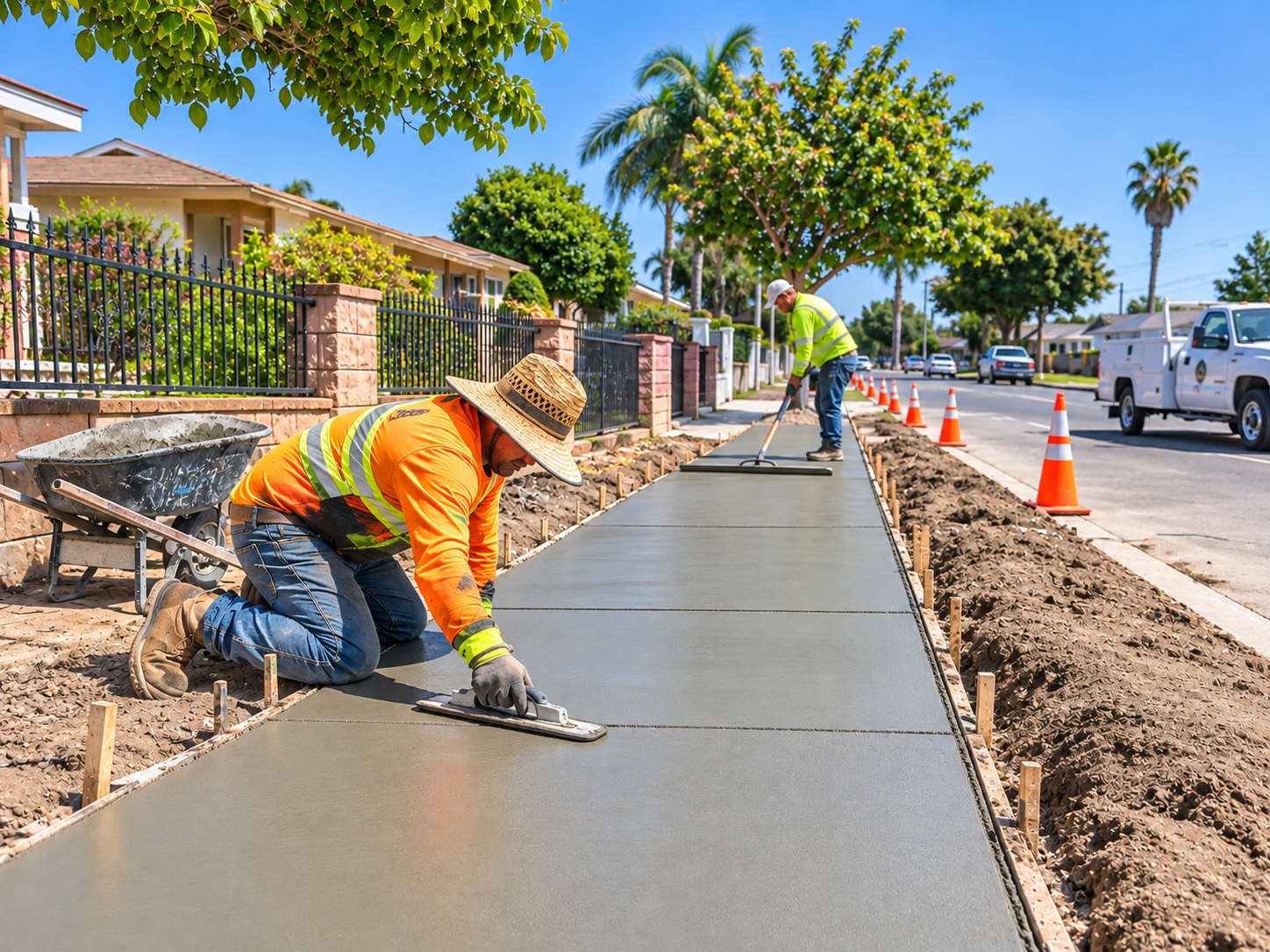
Most sidewalk failures I see trace back to whats under the concrete, not the concrete itself. So we start by saw-cutting the old slab, hauling it off, and grading down to firm native soil. Then we compact about 4 inches of Class 2 base, set the forms to a 2 percent cross slope, and tie #3 rebar on chairs so it actually sits mid-slab. Mix is a 3,000 PSI minimum with a broom finish and control joints every 4 feet. Out here on the Burton Mesa side of town the soil is mostly sandy loam, but we sometimes hit clay pockets that hold water, and those get extra compaction.
Base Prep and Slope Get Dialed In Before the Truck Rolls Up
Last September we replaced 64 feet of heaved sidewalk in front of a home off Rucker Road, a 4-foot-wide walk, so about 256 square feet. A big eucalyptus had pushed three panels up almost 2 inches and the homeowner had already tripped on it once. We cut out the old slab, had an arborist sign off on the root trimming, and poured a 5-inch thick section near the trunk with extra rebar. A new ADA ramp went in at the corner too. The county inspector passed it the day after we striped the forms, final bill was $4,380. Two days of work, plus a week for the concrete to cure.
A Heaved Walk Off Rucker Road Got Fixed in Two Days
People who call us are usually hunting for a Reliable Concrete Sidewalk Installation Contractor in Mission Hills, CA that actually shows up on the day it says it will. We’re out of North Hills, so we book Santa Barbara County jobs in full-day blocks and the same foreman stays on site from forms to final broom. We carry a C-8 concrete license through CSLB and full insurance, pull the county permit ourselves and warranty our flatwork for 2 years against settling and bad joints. If something’s off with the grade, I’d rather tear it out and redo it than hand you a sidewalk I wouldnt walk on myself.
Why Folks in Mission Hills Hand Us the Job and Stay Happy With It
For new sidewalk in Mission Hills we’re usually between $12 and $17 per square foot installed, and that number covers the base, forms, rebar, concrete and the broom finish. A standard 4-by-30-foot walk (120 square feet) lands around $1,440 to $2,040. Curb ramps with the truncated dome plates run $1,800 to $2,600 each. Tearing out old concrete adds about $3 to $5 per square foot, and county permit fees are seperate from all of this. Tree roots, steep grades, or hard access can push you toward the high end. You get a written quote with every line itemized, no surprises after the pour.
Installed Sidewalk Pricing Runs Around $12 to $17 Per Square Foot
Santa Barbara County Sidewalk Permits, ADA Rules, and Right-of-Way Requirements for Concrete Work
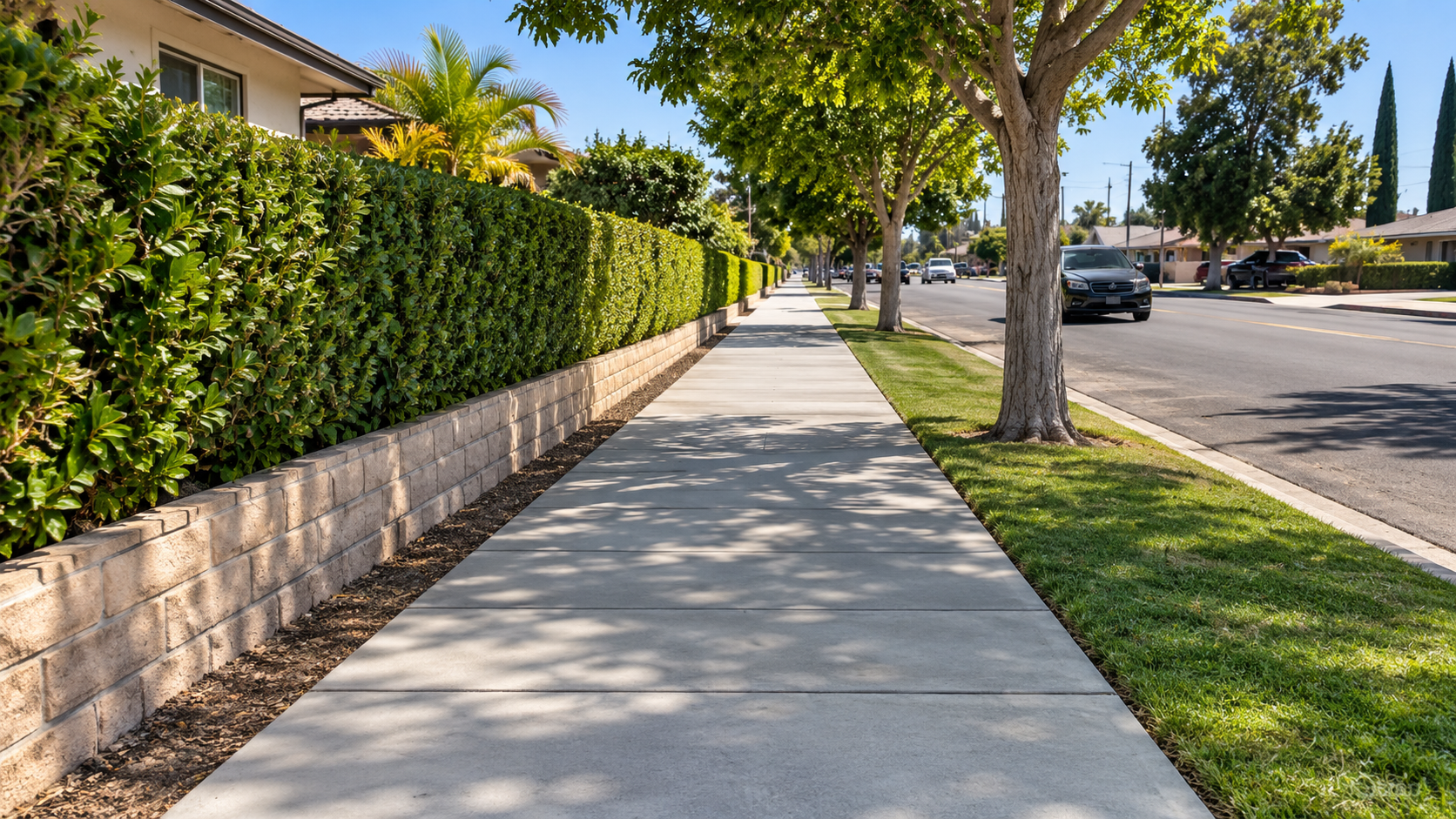
Encroachment Permits for Sidewalk Work in Unincorporated Mission Hills
Mission Hills isn’t its own city, its an unincorporated community, so sidewalk, curb and driveway apron work in the road right-of-way goes through Santa Barbara County Public Works for an encroachment permit. We file that ourselves and don’t start digging until it’s in hand. If your frontage touches Highway 1, Caltrans standards can come into play, so we sort that out first. Honestly it saves everybody a headache later.
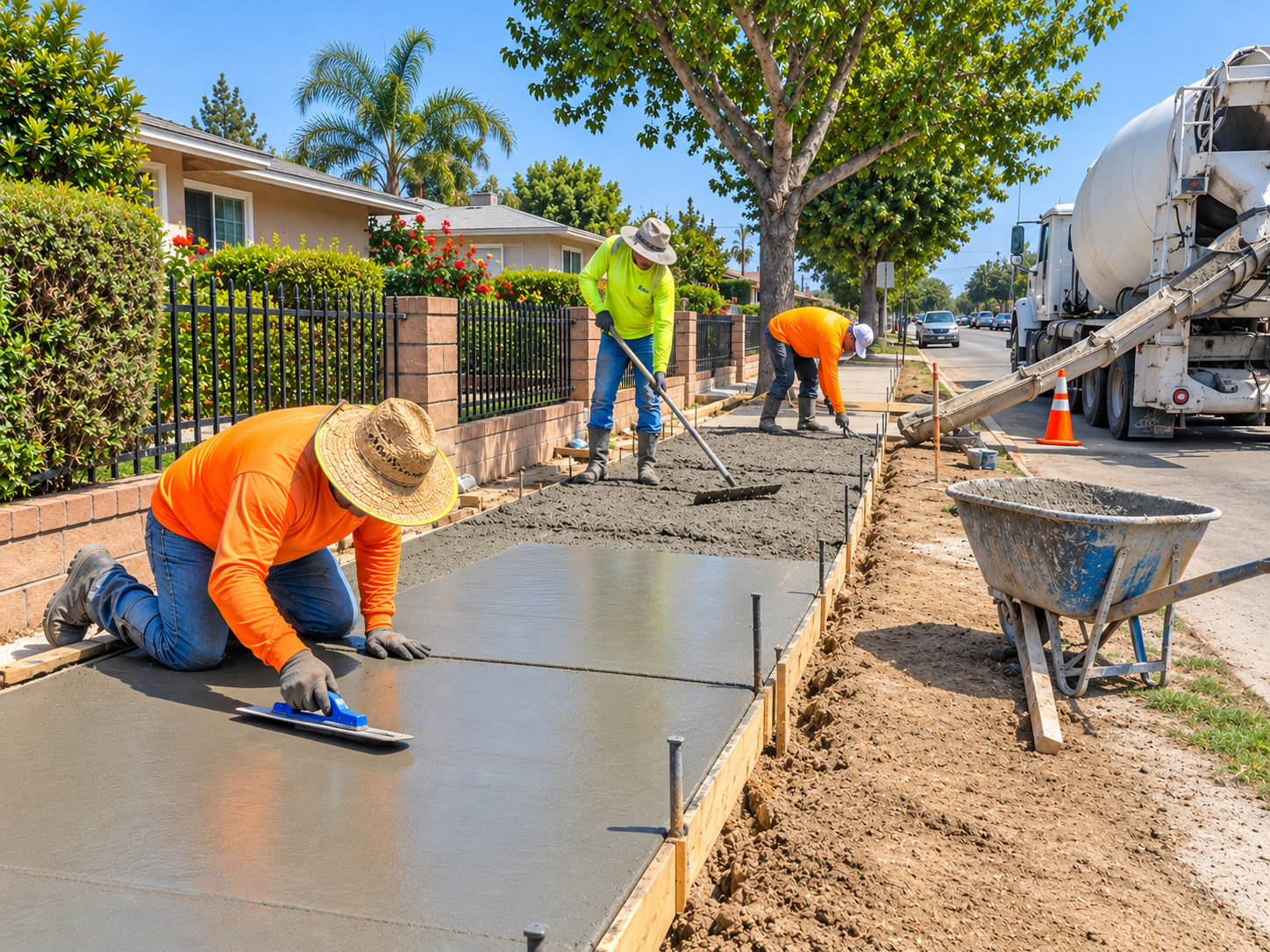
Property Lines, Right-of-Way Width, and Setback Checks Before Forming
Don’t assume your property ends at the sidewalk, because part of a front yard can sit inside the public right-of-way. Before we set forms we look at the recorded parcel map, hunt for survey pins, and confirm where the county’s road easement actually runs. Setbacks and lot standards fall under the County Land Use and Development Code, and we keep slabs, walls or steps from creeping into the right-of-way. If the lines look unclear we’ll recommend a surveyor before pouring.
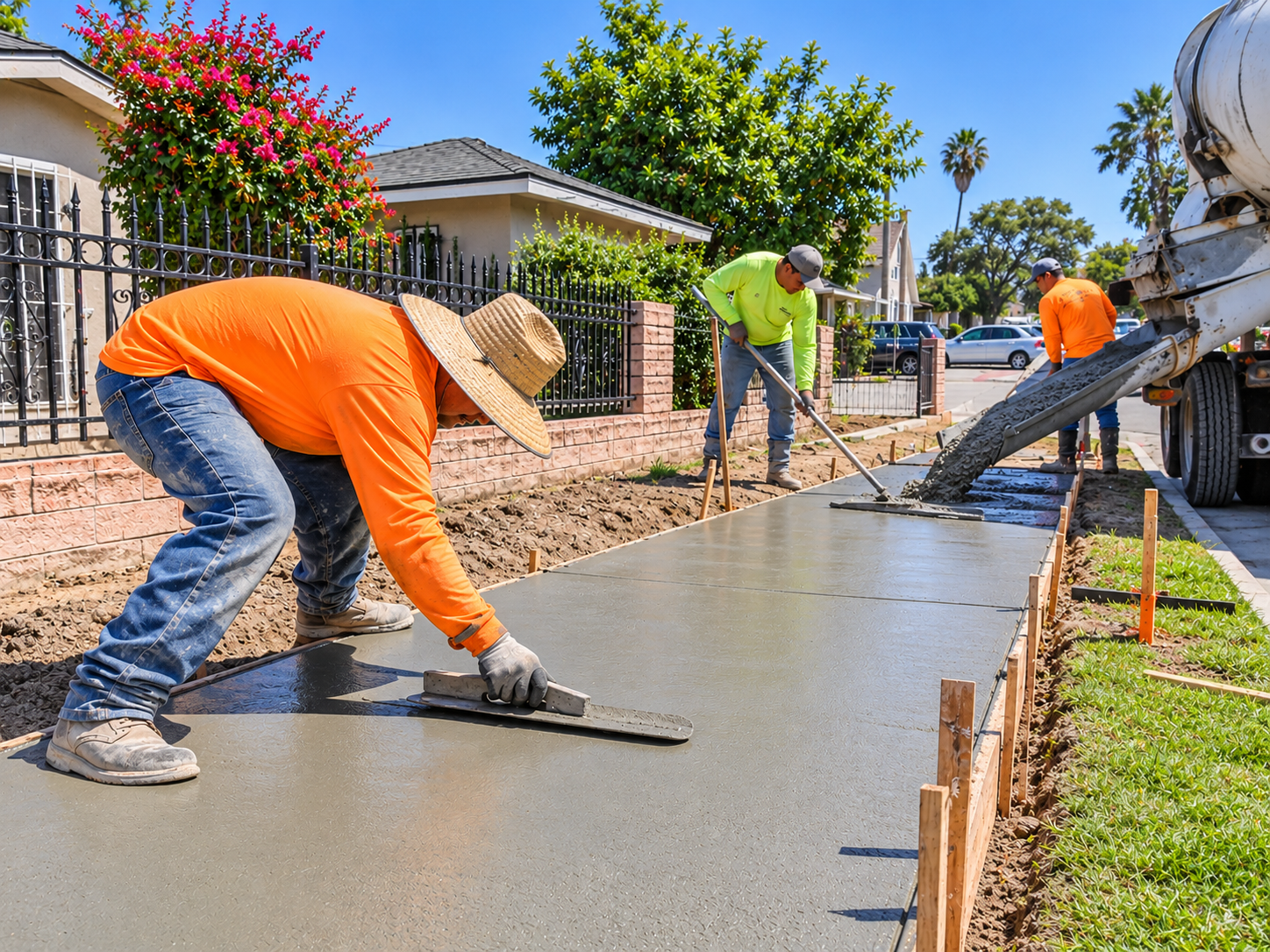
ADA Curb Ramps and Sidewalk Slope Standards
Public sidewalks have to meet federal accessibility guidelines, so we build to them. That means a continuous 4-foot clear width at minimum, a cross slope no steeper than 2 percent, and a running slope capped at 5 percent unless the street grade itself is steeper. Curb ramps get yellow truncated dome warning panels. The county inspector looks at these, and we check them first with a digital level, because a ramp thats half a percent off gets rejected.
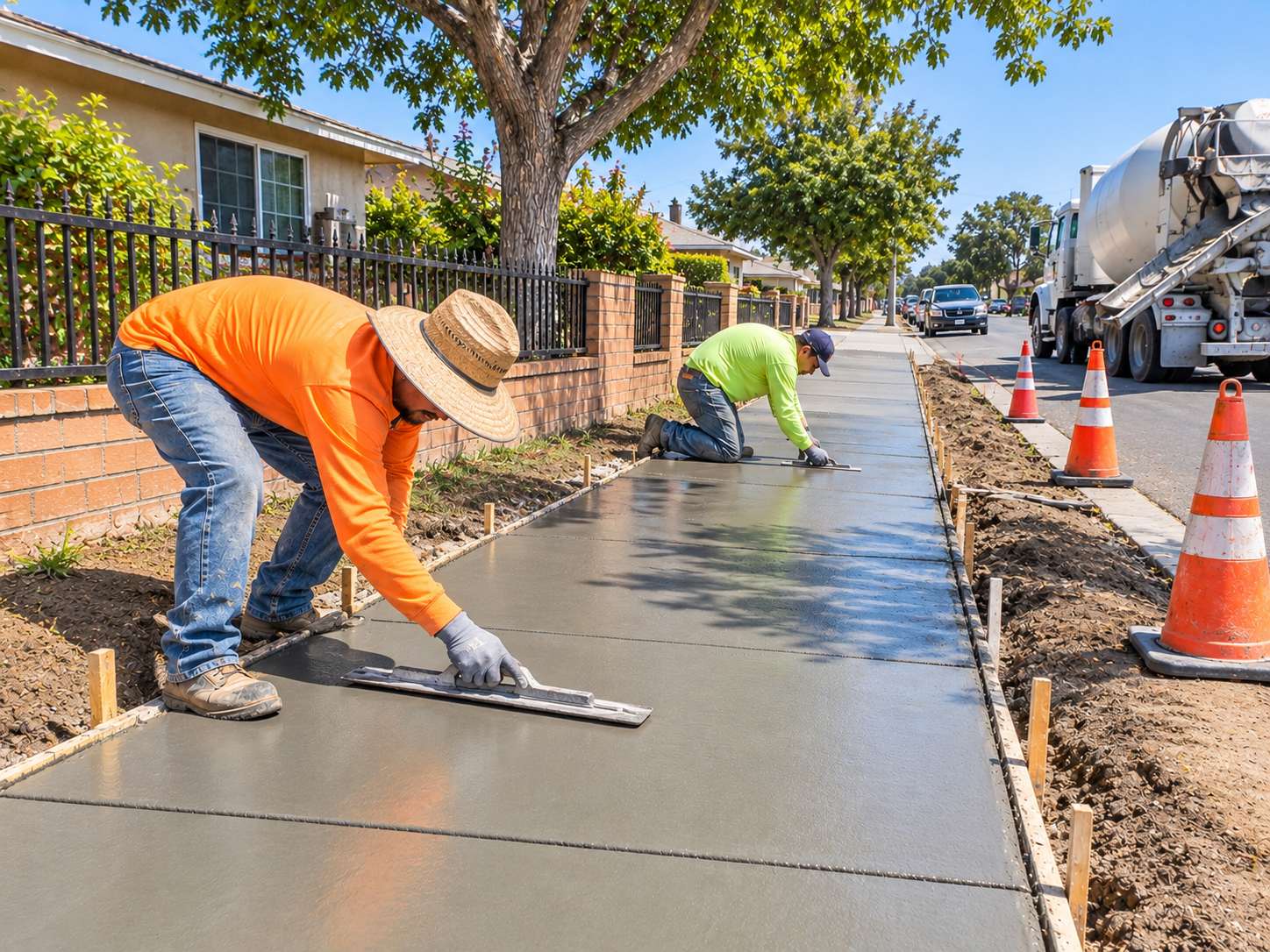
811 Utility Locates and Meter Box Conflicts
California law requires a DigAlert (811) ticket at least 2 working days before we dig, and we call it in on every job, no exceptions. Locators mark gas, electric, water, sewer and telecom lines, and we hand dig near the marks. Water meter boxes, cleanouts and pull boxes sitting in the walk get adjusted to the finished grade, and we keep their lids accessible for the utility. Hydrants and poles need clear walking width too, so layout adjusts around them.
County Inspections, Contractor Licensing, and Stormwater Practices
Any Reliable Concrete Sidewalk Installation Contractor in Mission Hills, CA should hold the right CSLB license, and ours is a C-8 concrete classification with insurance on file for the county. We call for inspection when the forms and base are ready, then again at final, and we dont pour until the inspector says go. Washout stays out of the gutter, storm drains get protected with wattles, and stormwater rules apply to every job no matter how small the walk is.
Frequently Asked Questions About Concrete Sidewalk Installation Contractor in Mission Hills, CA
Does the Marine Fog Slow Down Concrete Curing in Mission Hills?
It can. Cool mornings in the 50s and a thick marine layer stretch the set time, so finishing happens later in the day than it would inland. But the afternoon ocean wind works the other way and dries the surface fast, which causes crazing and plastic shrinkage cracks. We watch both, spray a curing compound right after finishing and sometimes use a fog mist on breezy days. Freezing is basically never a worry here.
What Does Burton Mesa Soil Mean for the Base Under My Sidewalk?
Mission Hills sits around 325 feet up on the mesa north of Lompoc, and a lot of the ground there is sandy, which drains well but can shift if it isn’t compacted. We proof-roll it, then lay and compact 4 inches of Class 2 aggregate base. Where we hit clay pockets or soft spots, we dig deeper and swap in base material, because clay swells in winter and cracks thin slabs.
Why Do Sidewalks Crack and Heave Around Here?
Tree roots are the number one culprit, mostly eucalyptus and pines with shallow roots chasing irrigation water. Next comes thin 3-inch slabs poured with no base, and clay pockets that swell when the winter storms hit. Missing control joints dont help either. We cut roots only with an arborist’s okay, place thicker concrete near trunks, and space joints every 4 feet so cracks go where we want them to.
How Long Until I Can Walk on It, and What If Rain Shows Up?
Foot traffic is usually fine after 24 to 48 hours, and we ask folks to hold off bikes, strollers and wheelbarrows for about 7 days. Full strength takes 28 days. Rain here comes in short heavy bursts between November and March, so we watch the forecast, cover fresh surfaces with plastic and schedule pours around storms. A hard shower on unprotected concrete pits the finish, and thats not fixable without grinding.
Can You Build a Walk on a Sloped Frontage Along a Mesa Lot?
Yes, though slope dictates the design. The walk follows the street’s grade, and the cross slope stays at 2 percent so water runs to the gutter, not toward your garage. Steps in a public walk aren’t allowed under accessibility rules, so on steeper grades we use gentle ramped sections instead. We shoot grades with a laser level before forming, since a half inch of error across 30 feet shows up as a puddle.