

Concrete Patio Installation Contractor in Mission Hills, CA
Thank you for contacting us.
We’ll get back to you as soon as possible.
We got it.
Most of our patios in Mission Hills start with a walk around the yard and a probe in the dirt. The ground on the mesa is sandy loam, drains quick, but it won’t hold a slab unless its compacted in lifts. We strip the sod, shoot grade for a 2 percent fall away from the house, and lay 4 inches of Class 2 base. Rebar goes in at #3 bars on 18-inch centers, then we pour 3,000 PSI mix and finish before the afternoon northwest wind dries the top. That order of work is what keeps a patio from cracking in year two.
We Pour Patios Around Burton Mesa Wind, Morning Fog and Sandy Ground
Plain broom-finish patios from our crew run about $9 to $13 per square foot in the Mission Hills area, which includes demo, base, rebar, forms, pour and finish. A typical 12 by 20 foot slab (240 square feet) lands around $2,200 to $3,100. Add integral color or an exposed aggregate border and expect $12 to $16. Stamped patios usually sit between $14 and $18. Old concrete removal tacks on roughly $2 per square foot, and a pump truck is extra if the truck cant reach the backyard. Everything gets written in the estimate, so no surprises after the pour.
What a Concrete Patio Costs Per Square Foot When We Do the Work
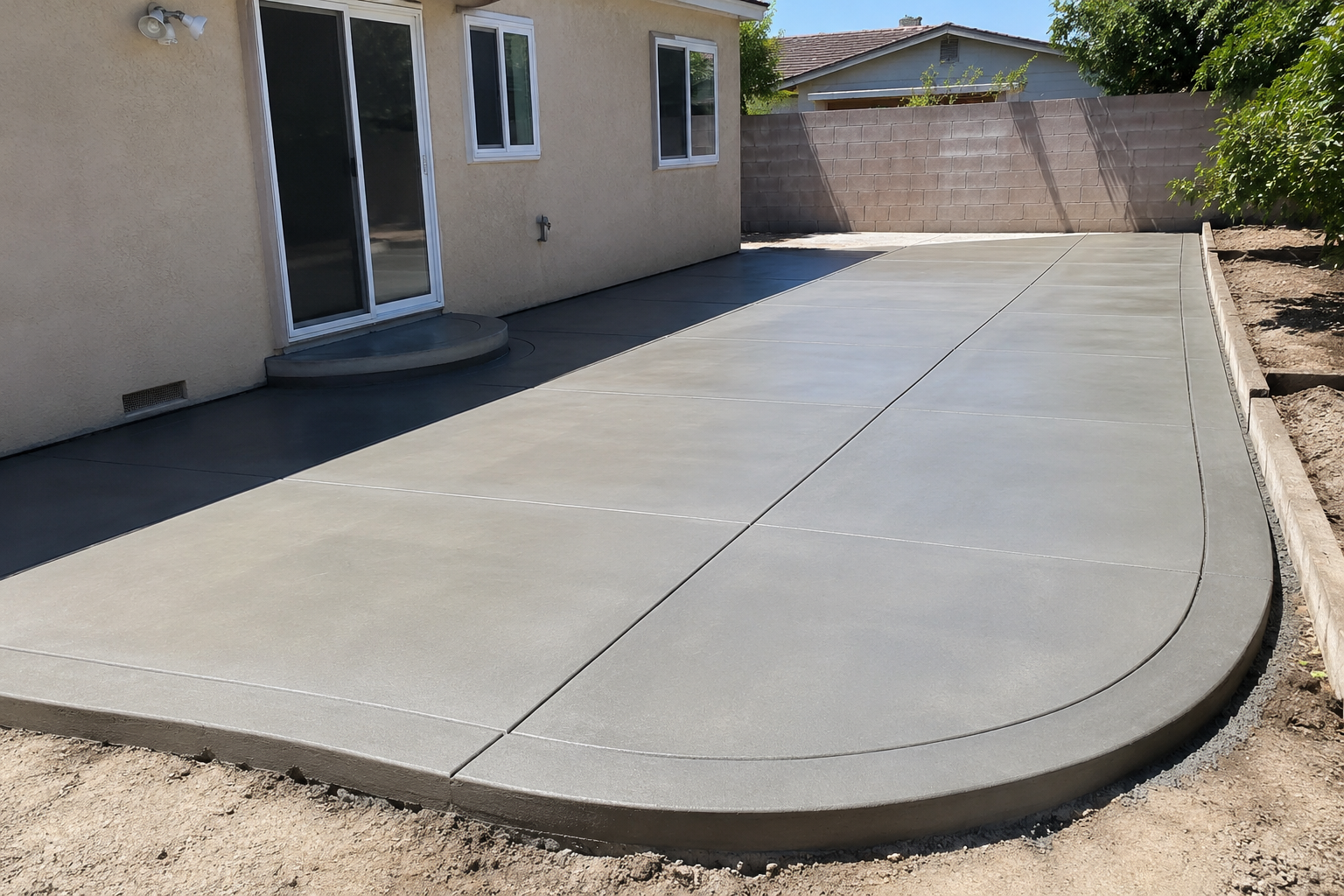
Last September we finished a 432-square-foot patio for a retired couple on Tularosa Court, a couple minutes from Burton Mesa Boulevard. They wanted a broom finish with a saw-cut border and a gentle slope away from the sliding door, because the old pavers had settled and pushed water toward the house. We pulled out the pavers, recompacted the sand, added 4 inches of base, and poured on a Thursday morning in 58 degree fog. Total came to $5,180. The owner said the water now runs out to the lawn instead of toward the slider, which was the whole point.
A Fresh 432-Square-Foot Patio Pour Off Burton Mesa Boulevard
Honestly, the cheap bids we get asked to fix all have the same problem: nobody checked the base. If your hunting for a Trusted Concrete Patio Installation Contractor in Mission Hills, CA, ask who is on site the day of the pour. Ours is the same crew from layout to final sweep, and the owner walks every job. We carry a CSLB license and workers comp, we pull permits when a project needs one, and we saw-cut joints within 12 hours so slabs crack where we want. Then we leave a written 1-year workmanship warranty. Thats really it, no gimmicks.
Why Homeowners Around Mission Hills Pick Our Crew Over a Cheaper Bid
Concrete Patio Permits, Grading Rules and Building Code Requirements for Mission Hills, CA Homeowners
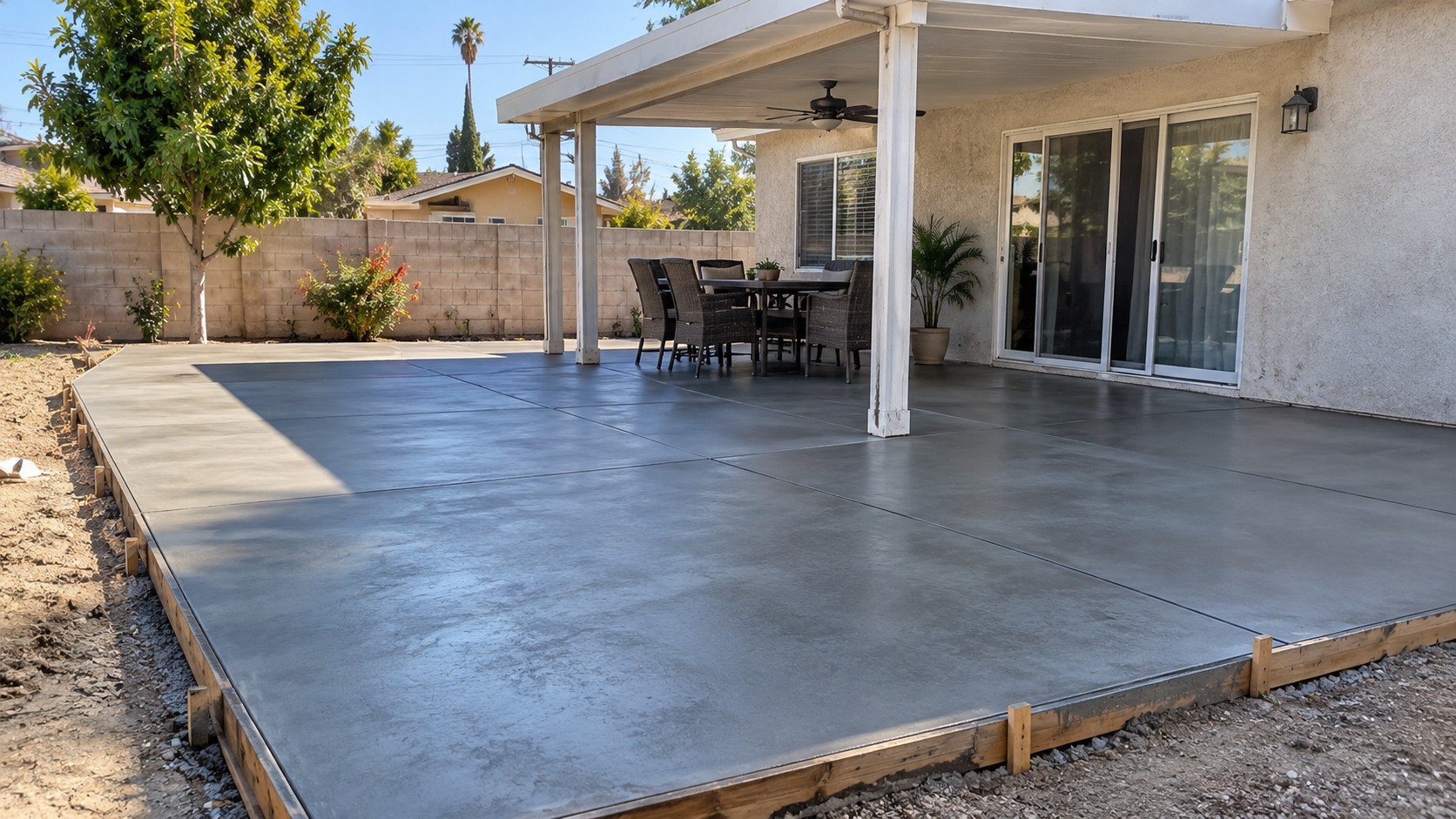
Santa Barbara County Building and Safety Issues Permits Because Mission Hills Is Unincorporated
Mission Hills isn’t its own city, it’s an unincorporated community, so permits run through Santa Barbara County Planning and Development, Building and Safety, and applications go in online through the Accela portal. The Santa Maria office on West Foster Road covers this side of the county. As a Trusted Concrete Patio Installation Contractor in Mission Hills, CA, we confirm with the county first before we price anything, so there are no surprises later.
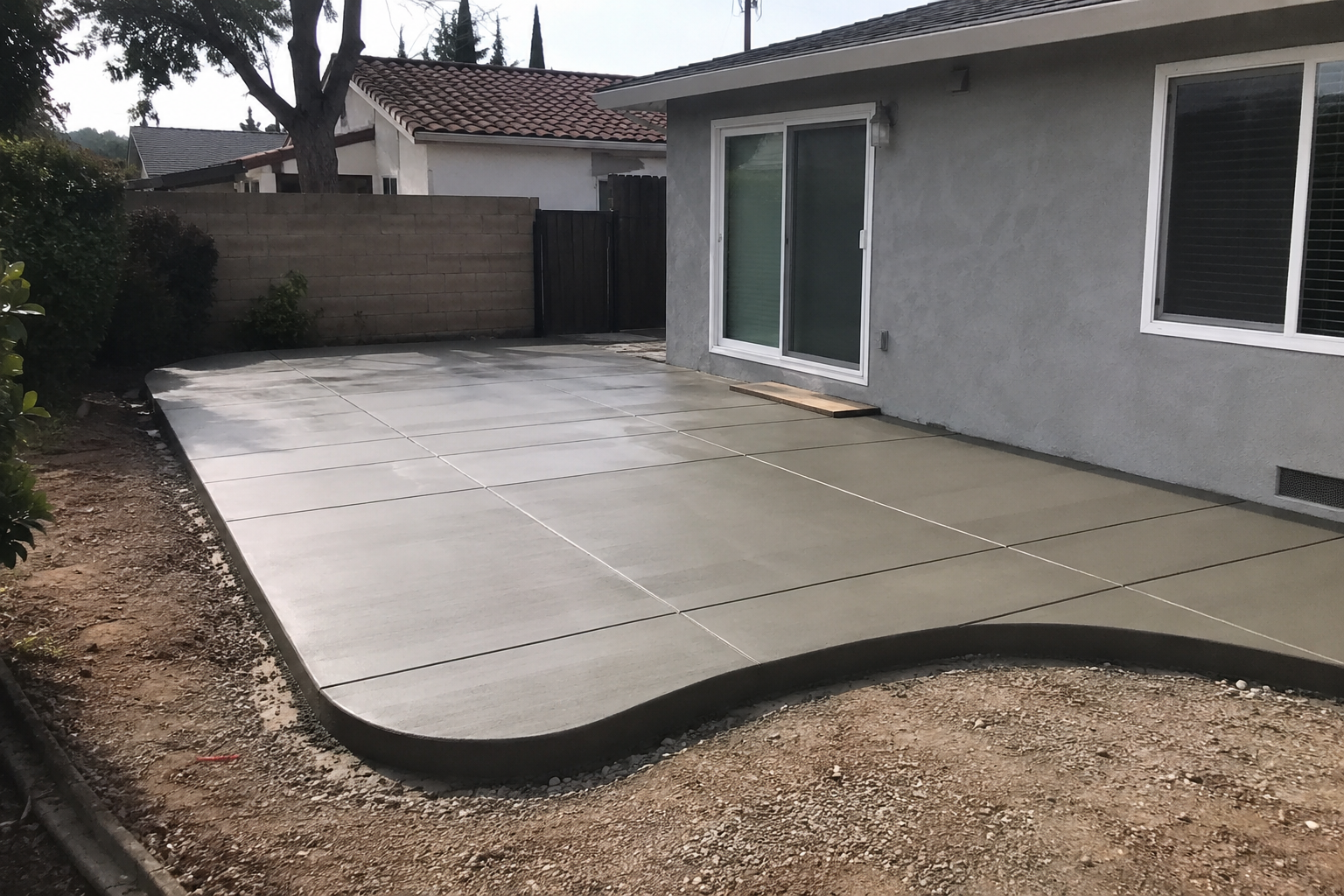
Slabs Over 30 Inches, Retaining Walls and Attached Covers Can Trigger Plan Check
County building code exempts sidewalks and driveways not more than 30 inches above grade, and a flat patio is usually handled the same way, but we confirm that with county staff for each lot. Raise the slab higher, add a retaining wall over 4 feet from the bottom of the footing, or attach a patio cover to the house, and a permit and plan check come into play. An exemption doesn’t excuse zoning, grading or other county rules.
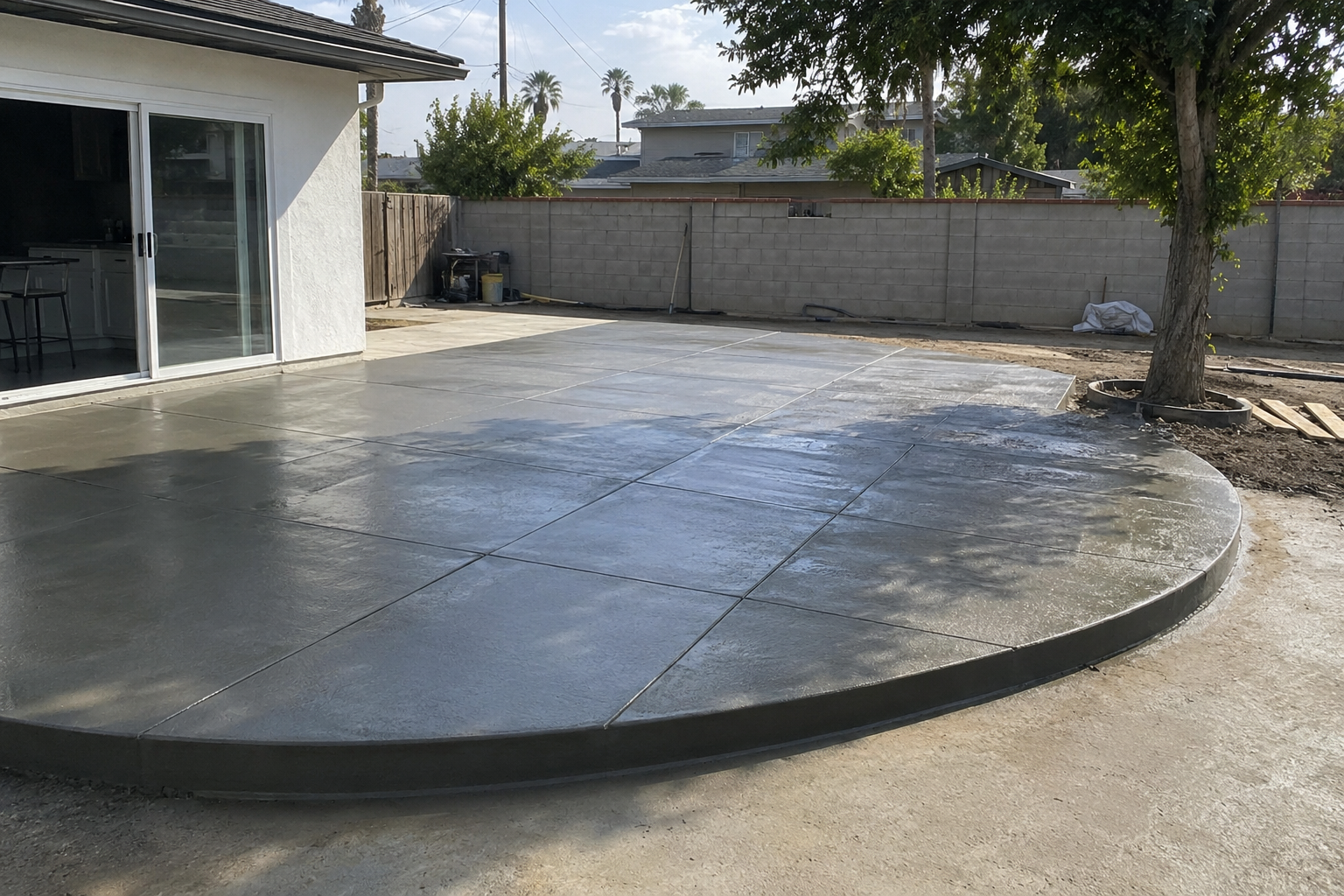
Setbacks, Easements and Zone District Rules Decide How Close a Patio Can Get to the Property Line
Every parcel in the county sits in a zone district, and that zone sets the setbacks and other development standards. A flat slab is treated different than a roofed patio cover or a raised deck, so we pull the parcel’s zoning and look at recorded easements before layout. Utility easements along the rear lot line are the usual trouble. We would rather move a patio edge 3 feet in the design stage then tear out concrete later.
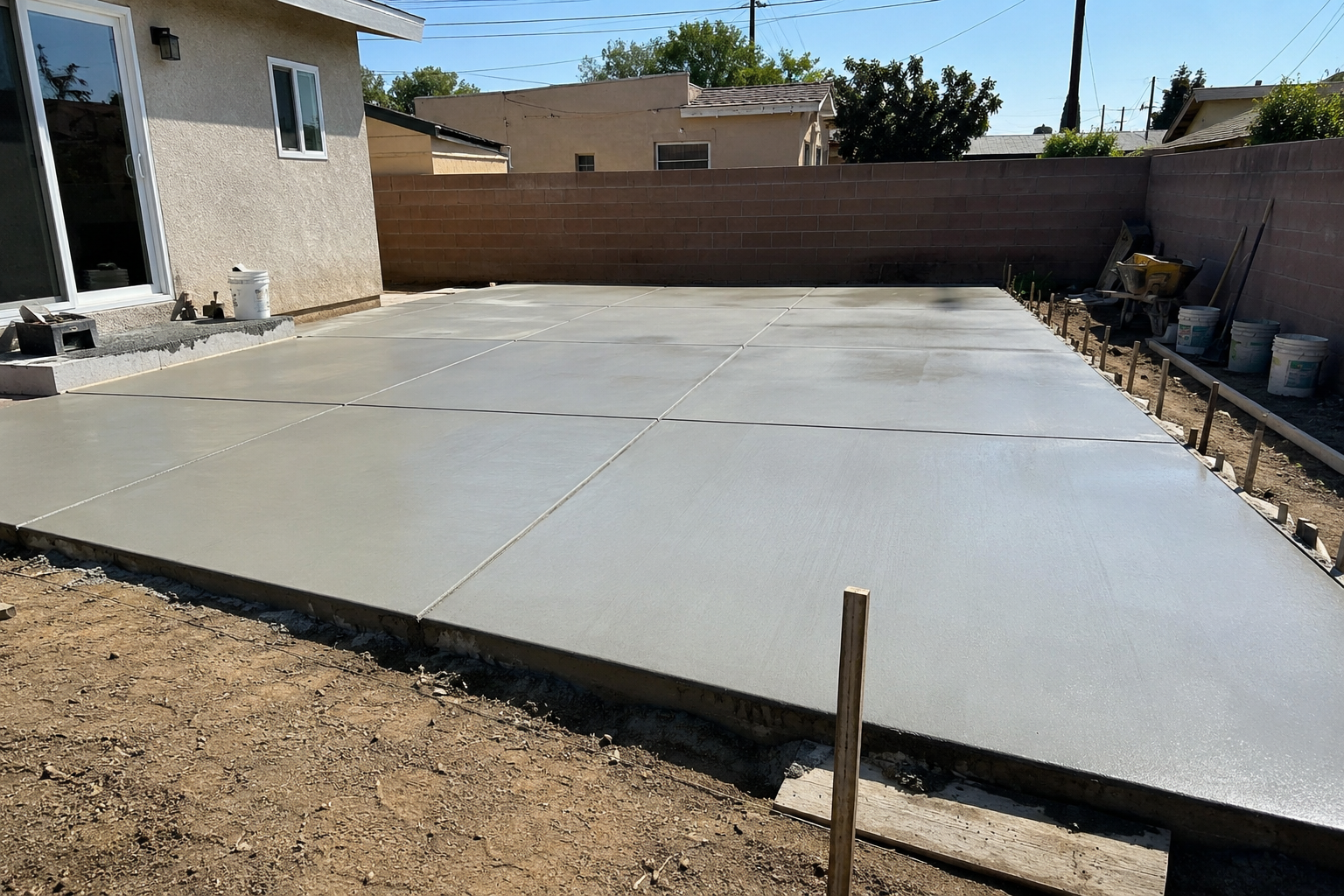
Mission Hills Community Services District Lines and 811 Locates Come Before Any Digging
Water and sewer service here comes from the Mission Hills Community Services District, so we keep its laterals, meters and cleanouts in mind when laying out a patio. Nobody should bury a sewer cleanout under new concrete. Before the excavator touches dirt we call 811 for a locate, since California law gives utility owners two working days to mark their lines. If the marks look off, we pothole by hand first.
County Grading, Drainage and Erosion Control Rules Apply Even to a Backyard Patio
Chapter 14 of the County Code covers grading and erosion control across all unincorporated territory, and permits kick in once earthwork passes certain thresholds. Most patio excavation stays well below those, but we figure the cubic yards before we start. Either way we keep runoff on the property, slope the slab away from the foundation, and use fiber rolls so loose sand doesn’t wash into the street. If a permit was needed, we schedule the county inspections and keep approved plans in a seperate folder on site.
Common Questions About Concrete Patio Installation in Mission Hills, CA
Does Morning Fog Slow Down How Fast a Patio Cures in Mission Hills?
Yes, a little. Marine fog keeps mornings cool and damp, with overnight lows in the high 40s much of the year, so concrete takes longer to set and finish than it would inland. That helps curing since water stays in the slab. We still cure with a membrane compound for 7 days, keep foot traffic off for 48 hours, and hold off on heavy stuff like a hot tub for about 28 days.
How Does the Sandy Soil on Burton Mesa Change Base Preparation?
Sandy loam drains great but it shifts, so the base matters more than people think. We scrape out organic topsoil, compact in lifts with a plate compactor, and put 4 inches of Class 2 aggregate base on top. Where we hit pockets of clay or old fill, we dig deeper and swap the material so the slab doesn’t settle in one corner. A little moisture while compacting helps too, dry sand wont pack.
When Is the Best Time of Year to Pour a Patio Here?
Late spring through early fall is our sweet spot. Most of the area’s roughly 15 inches of yearly rain falls between November and March, and a surprise storm on fresh concrete can pit the surface. Freezing isnt really a worry on the Central Coast, so there’s no freeze-thaw cycle to design around. We do pour in winter on dry windows, we just keep plastic sheeting and extra hands on site.
Do the Afternoon Northwest Winds Cause Cracks in Fresh Concrete?
They can. Cool breezes off the Pacific pick up most afternoons, and wind pulls moisture off the surface faster than the slab can bleed it, which leads to plastic shrinkage cracks. So we pour early in the day, set windbreaks when needed, spray an evaporation retarder, and get curing compound down as soon as finishing is done. Control joints cut roughly 8 to 10 feet apart steer any cracking into straight lines.
How Should a Patio Be Sloped for Winter Runoff on a Hillside Lot?
We pitch patios at least 1/4 inch per foot, about 2 percent, away from the house so winter storm water doesn’t pond against the slider or foundation. On sloped lots we also tie the slab edge into a swale or drain line that sends water toward the street or a safe corner of the yard, never toward the neighbor. Sand and gravel under the slab drain fine, but the surface itself still has to move the water.