

Concrete Patio Installation Contractor in Panorama City, CA
Thank you for contacting us.
We’ll get back to you as soon as possible.
We got it.
Most patio jobs we do around Panorama City begin the same way, with a walk around the yard and a string line. We strip the sod, dig out roughly 7 inches, then compact 3 to 4 inches of Class 2 base to 90 percent or better. Forms go in with a quarter inch per foot of fall away from the house. We tie #3 rebar on 16 inch centers, pour a 3,000 PSI mix minimum (4,000 on some jobs), and saw-cut joints before the concrete gets cranky. Then we cure it right, thats the part alot of crews skip.
Every slab starts with a layout walk, grade stakes and a compacted base
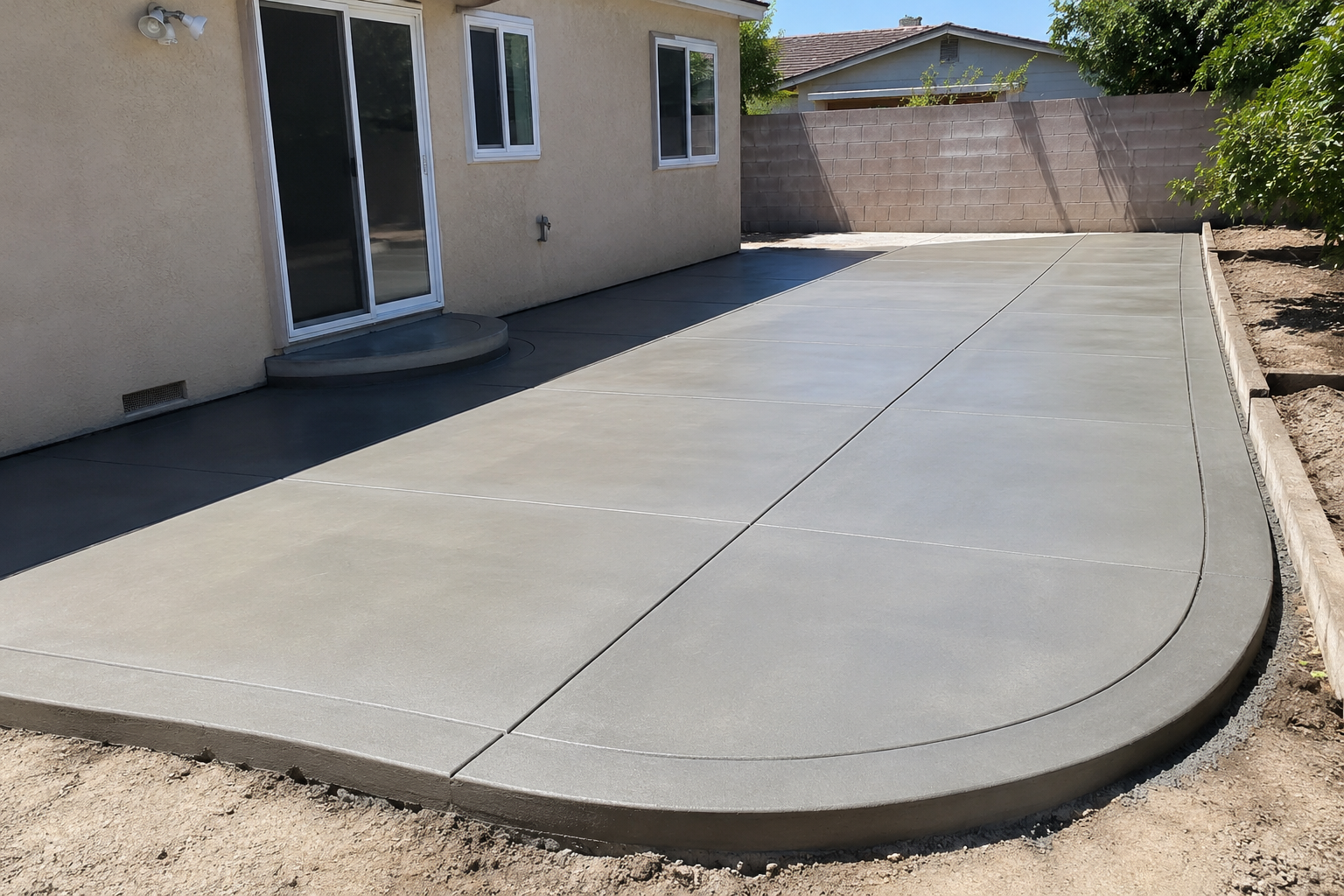
Last October we finished a broom-finish patio behind a 1952 ranch home off Cedros Avenue, a few blocks from Roscoe Boulevard. The family, a couple with two kids and a big dog, wanted room for a long table on weekends. We broke out a cracked 3 inch slab and a dead lemon tree stump, hauled in about 5 yards of base, and poured roughly 7 yards of 4,000 PSI concrete, 5 inches thick, with #3 rebar at 16 inches on center. Total was $5,880 and it took 3 working days. They texted us a photo of the first carne asada on it.
A recent 420 square foot backyard patio off Cedros Avenue near Roscoe Boulevard
Kingdom Concrete Contractors of North Hills is based just west of Panorama City, so we’re usually on your street in 15 minutes, not an hour. People choose us because the same guys who quote the job actually pour it, no day labor handed off to strangers. As a Reliable Concrete Patio Installation Contractor in Panorama City, CA, we also know those post-war Kaiser tract homes, with their small lots and old slab-on-grade foundations, and where the old patios like to crack. You get photos and a written scope before any deposit. We don’t rush a pour just to make another job by noon.
Why Panorama City homeowners keep calling a North Hills crew back
Straight talk on price. A plain broom-finish patio from us runs about $10 to $14 per square foot installed, which covers demo of the old slab, base, rebar, forms, pour and saw cuts. Colored or stamped work goes from $16 to $26 depending on the pattern and how many release colors you want. Under 200 square feet we have a $2,400 minimum, because the truck, pump and crew cost us the same either way. A typical 12 by 20 patio, so 240 square feet, lands near $2,600 to $3,400 with a broom finish. Its all in writing before you sign.
Patio pricing here usually lands between $10 and $26 per square foot
Concrete Patio Permits, Setbacks and Inspection Requirements in Panorama City
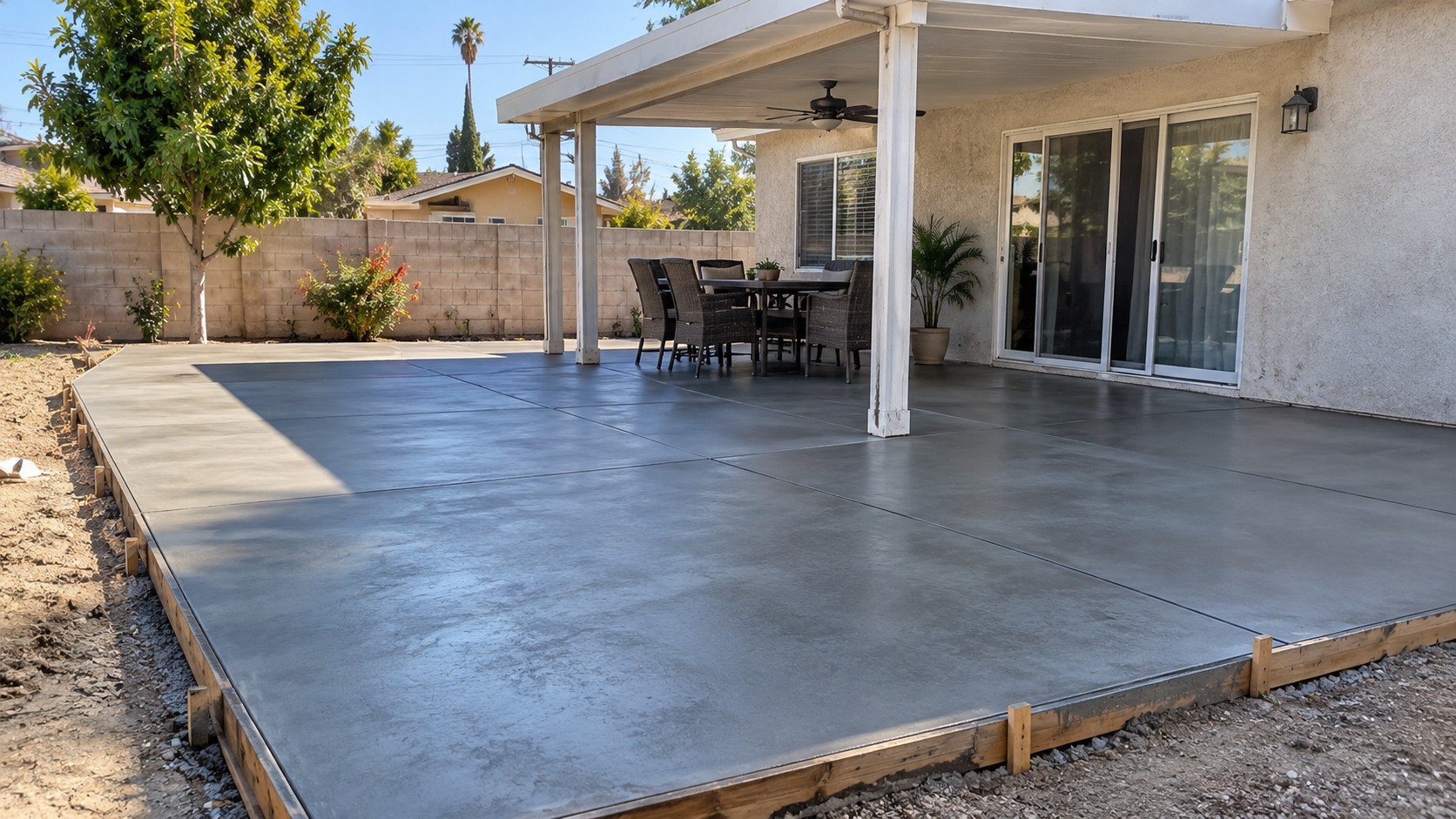
Do uncovered patio slabs in Panorama City need a building permit?
Most of the time, no. A plain slab that stays at grade, under 30 inches high, with no roof and no utilities running through it, is generally exempt from a building permit under the California Residential Code. Los Angeles follows that through LADBS. Still, we check with LADBS before we quote, because a retaining wall or raised deck changes everything. As a Reliable Concrete Patio Installation Contractor in Panorama City, CA, we dont guess on this stuff.
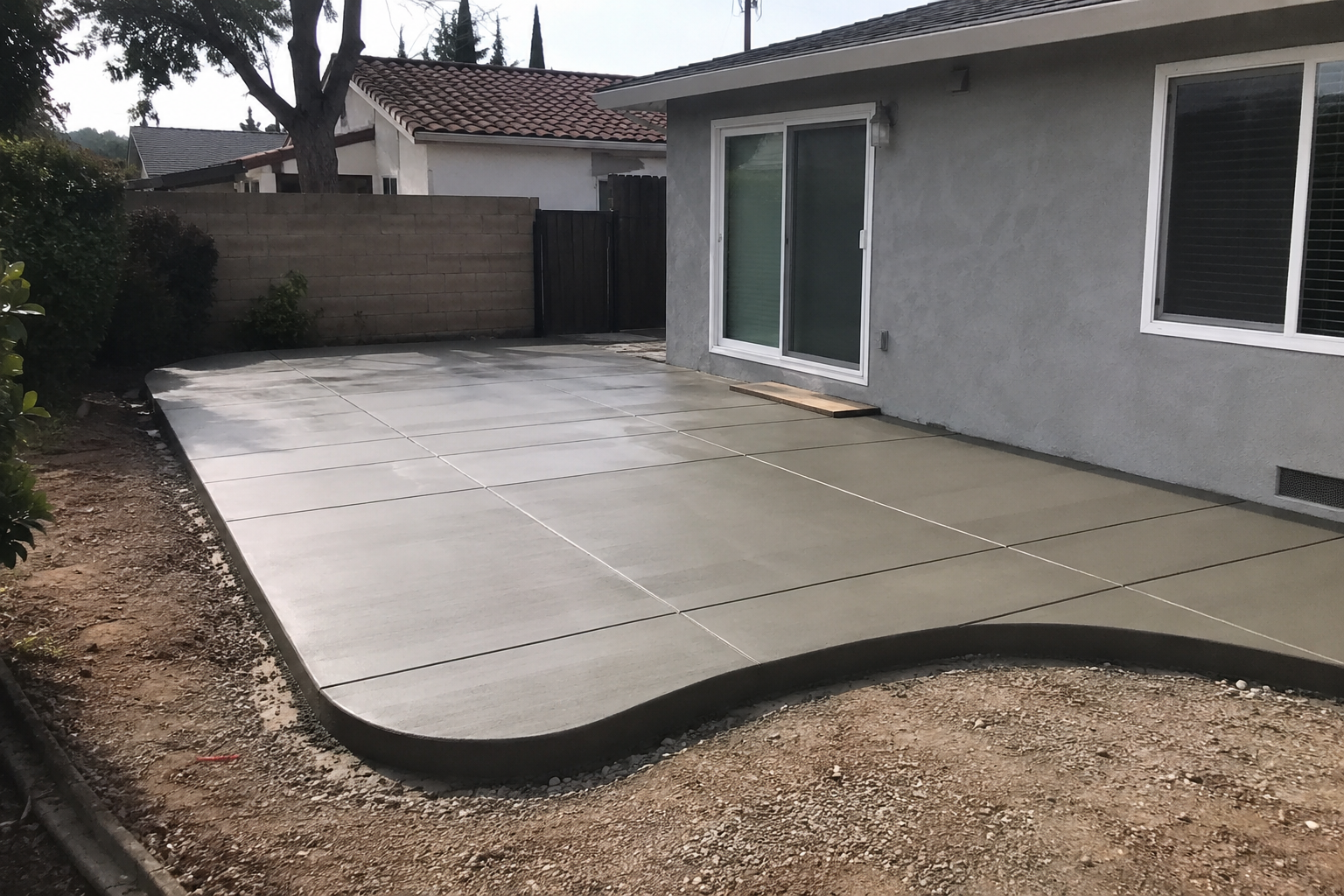
Patio covers, attached structures and Express Permits through LADBS
Add a roof and the picture flips. In Los Angeles a detached cover under 120 square feet is exempt, but anything bigger, and every cover attached to the house, needs a permit from LADBS. Simple covers can go through the Express Permit process at a Development Services Center, sometimes same day. The city sits in Seismic Design Category D, so footings and post connections have to be designed for earthquake loads. We pour footings to match the approved drawings, not our own opinions.
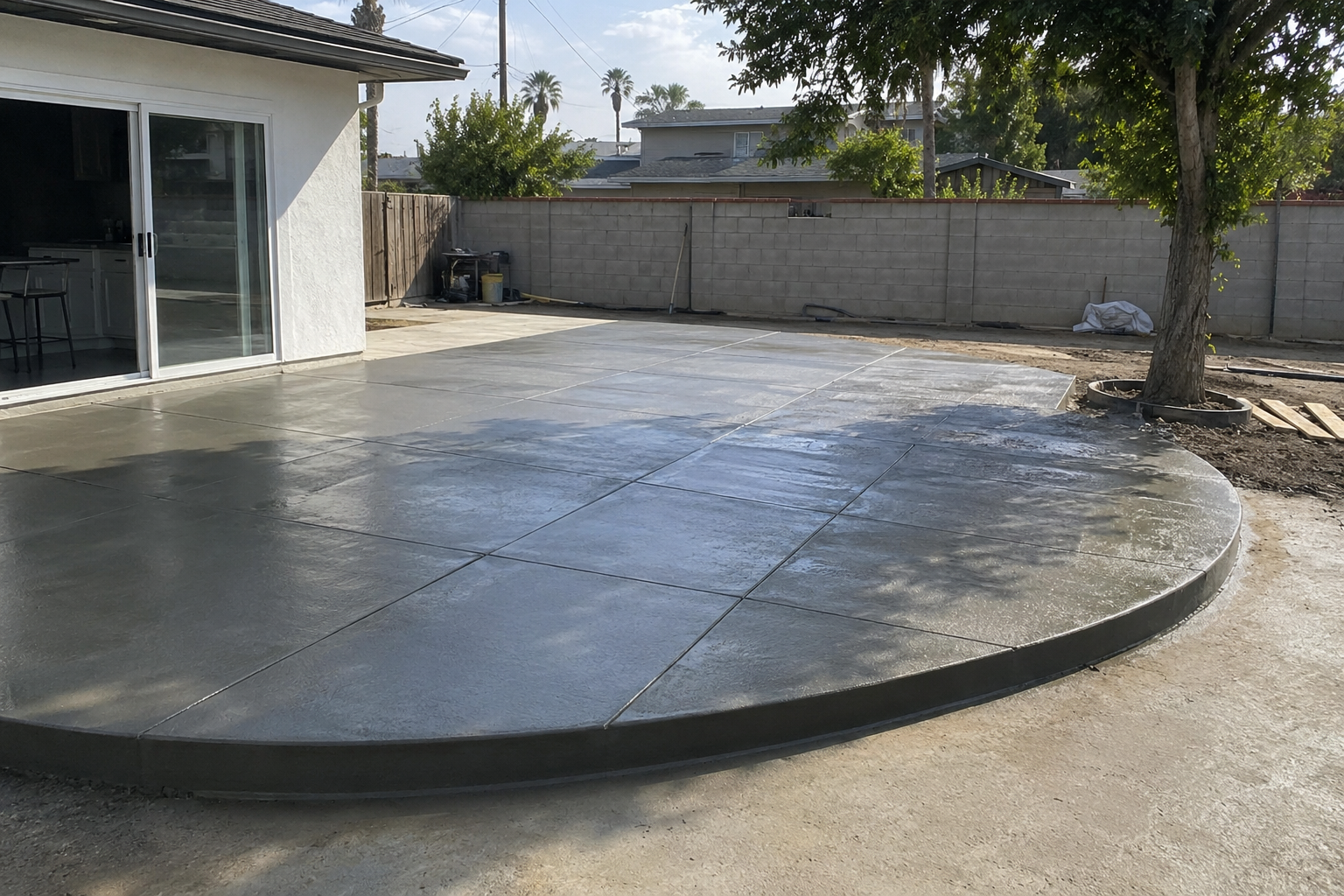
Setbacks, lot coverage and easements on Panorama City lots
No building permit doesn’t mean no rules. Zoning still applies, and a patio sitting inside a required setback or over an easement can be ordered removed even when nobody needed a permit for it. Before we set forms we measure from the property line, look up the lot on the city’s ZIMAS zoning tool, and check for easements. Most older single-family lots out here are small, so a few feet really does matter.
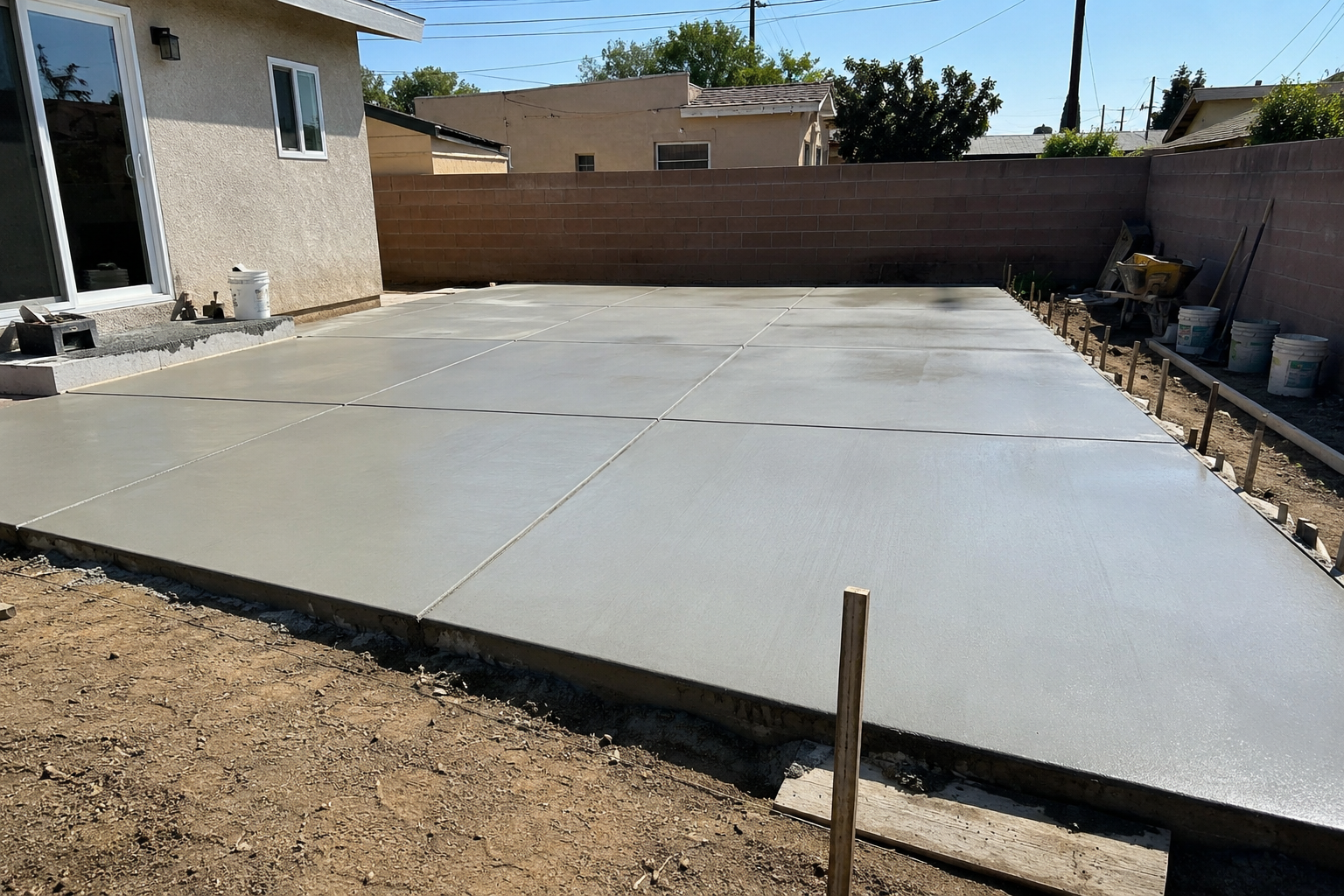
Calling 811 and marking utility lines before we dig
California law requires a DigAlert ticket, so we call 811 at least two working days before any excavation. Utility companies mark underground gas, electric and communication lines, and we hand-dig close to the paint marks. We also locate sewer cleanouts, water meter boxes and irrigation valves, since a slab poured over a cleanout is a headache for the next plumber. Whichever lines show up on your lot, we note them on the job sheet seperate from the quote.
Right-of-way work, inspections and HOA approval
If your project touches the sidewalk, parkway or driveway apron, thats public right-of-way, and it goes through a separate city permit with the Bureau of Engineering, not the building counter. When a building permit is involved, we schedule inspections for forms and rebar before the pour, and then a final. Got a HOA or CC&Rs? Get their sign-off in writing first. We keep copies of every approval in the job folder.
Frequently Asked Questions About Concrete Patio Installation in Panorama City
How does summer heat in Panorama City affect a fresh concrete pour?
Valley summers regularly push into the mid-90s and sometimes past 100 degrees, and dry Santa Ana winds pull water out of a slab way too fast. That causes plastic shrinkage cracks. So we pour early, wet down the subgrade, use evaporation retarder when needed, and apply curing compound right after finishing. In July and August we’ll often start at sunrise and be done by noon. Shade cloth over the work area helps on the worst days.
What kind of soil sits under Panorama City patios, and does it matter?
The Valley floor is mostly alluvial soil, sand, silt and gravel washed down from the surrounding mountains, with a few clayey pockets that swell and shrink. Drainage is generally decent, but loose backfill near old foundations settles. We compact the subgrade, lay 3 to 4 inches of Class 2 base, and if we hit soft spots or fill we dig deeper rather than pour over it. A soils report usually isnt needed for a simple at-grade patio.
How do you get water to drain away on flat San Fernando Valley lots?
Its flat out here, roughly 700 feet above sea level, so the grading is on us. We set forms with about a quarter inch of fall per foot, at least 2 percent, running away from the house and toward a lawn, planter or the street side, never toward the foundation or a neighbor’s fence. Rain averages around 15 inches a year, but it falls in heavy bursts between November and March, so low spots that hold water show up fast.
Will my new patio crack, and what are the saw cuts for?
All concrete cracks eventually, so we decide where. Saw cuts go in about every 8 to 10 feet, a quarter of the slab depth, usually within 6 to 12 hours of finishing. Southern California also gets small earthquakes and ground movement, and mature tree roots in older Valley neighborhoods can push on slabs. Rebar doesn’t stop cracks, it keeps them tight. A hairline crack running along a saw cut is normal and nothing to panic about.
When is the best time to pour a patio in the Valley, and when can I use it?
Fall and spring are the sweet spot, before the rainy season gets going or after it ends. Summer works if we pour early, and winter works between storms. You can walk on it after 24 to 48 hours, set patio furniture around day 7, and put a heavy grill or planters on it after about 28 days, when the concrete reaches full design strength. We seal stamped and colored work around then too.